
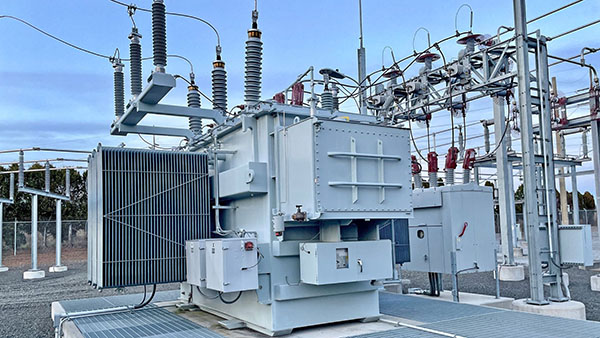
Transformers are essential for managing high voltages and ensuring seamless power distribution in electrical systems. However, their performance depends heavily on the integrity of their insulation. Over time, factors like heat, moisture, or wear can degrade this insulation, risking failures or safety hazards. That’s why conducting an insulation resistance test is a vital maintenance task.
In this article, we’ll provide a clear, step-by-step guide to performing an insulation resistance test on a transformer. Whether you’re an experienced technician or just starting out, these instructions will help you safeguard your equipment and maintain operational efficiency.
What is an Insulation Resistance Test?
An insulation resistance test evaluates the condition of a transformer’s insulation, which acts as a barrier between conductive components like windings and the core. The test uses a megohmmeter (or insulation tester) to apply a high DC voltage—typically between 500V and 5,000V—and measures the resistance to current leakage in megohms (MΩ).
- High resistance (e.g., >100 MΩ): Indicates healthy insulation.
- Low resistance (e.g., <10 MΩ): Signals potential insulation breakdown.
This test is a proactive way to detect weaknesses before they escalate into serious problems.
Why is This Test Important?
Routine insulation resistance testing delivers key benefits:
- Prevents Failures: Identifies insulation issues early, reducing the risk of unexpected outages.
- Enhances Safety: Protects workers from electrical hazards like shocks or fires.
- Reduces Costs: Avoids expensive repairs and downtime by addressing problems proactively.
- Ensures Compliance: Meets industry standards such as IEEE or IEC guidelines.
For instance, a facility once dodged a major shutdown by catching declining insulation resistance during a scheduled test, fixing it before it caused a costly failure.
Step-by-Step Guide to Conducting the Test
Follow these steps to perform an insulation resistance test safely and accurately:
1. Preparation
- De-energize the Transformer: Disconnect all power sources to the transformer.
- Ground the System: Safely discharge any residual voltage.
- Clean the Transformer: Wipe away dirt, oil, or moisture that could affect the test results.
2. Safety First
- Wear personal protective equipment (PPE), including insulated gloves and safety glasses.
- Use a voltage detector to confirm the transformer is fully de-energized.
- Apply lockout/tagout procedures to prevent accidental re-energization during testing.
3. Set Up the Megohmmeter
- Select the appropriate test voltage based on the transformer’s rating (e.g., 1000V for medium-voltage transformers).
- Connect the megohmmeter leads:
- One lead to the winding being tested.
- The other to ground (or between windings for additional checks).
4. Perform the Test
- Apply the test voltage for 60 seconds.
- Record the resistance reading in megohms (MΩ).
- Repeat the process for each winding and between windings as needed.
5. Interpret the Results
- Healthy: Resistance typically exceeds 100 MΩ (refer to manufacturer specifications).
- Warning Zone: 10-100 MΩ—monitor the transformer closely for deterioration.
- Critical: Below 10 MΩ—investigate immediately; insulation may be compromised.
- If readings are low, clean or dry the transformer and retest. Persistent low readings require professional attention.
Pro Tip: Compare results to baseline readings from when the transformer was new or in peak condition for a clearer picture of its health.
Common Mistakes to Avoid
To ensure reliable results, steer clear of these pitfalls:
- Testing a Live Transformer: Always de-energize the system first—testing live equipment is dangerous and inaccurate.
- Using Incorrect Voltage: Too low a voltage may miss issues; too high can damage the insulation.
- Ignoring Temperature Effects: Hot transformers yield lower readings—allow cooling before testing.
Avoiding these errors ensures your test is both safe and effective.
Conclusion
An insulation resistance test is a fast, powerful tool to maintain transformer reliability, enhance safety, and extend equipment lifespan. By making it a regular part of your maintenance routine, you can catch issues early and keep your operations running smoothly.
Don’t leave it to chance—prioritize transformer testing today.
Take Action Now
Need the right equipment to start testing? Check out our range of insulation resistance testers, built for precision and durability. Visit our site now to find the perfect tool for your transformer maintenance needs.

 Tibetan
  English
  German
  Spanish
  French
  Portuguese
  Vietnamese
  Afrikaans
  Amharic
  Arabic
  Aragonese
  Moroccan Arabic
  Assamese
  Azerbaijani
  South Azerbaijani
  Belarusian
  Bulgarian
  Bengali
  Bosnian
  Catalan
  Czech
Czech  Danish
  Welsh
Welsh  Lower Sorbian
  Dzongkha
  Greek
Greek  Esperanto
  Estonian
  Basque
  Finnish
  Indonesian
  Italian
  Malayalam
  Latvian
  Panjabi
  Romanian
  Slovenian
  Russian