
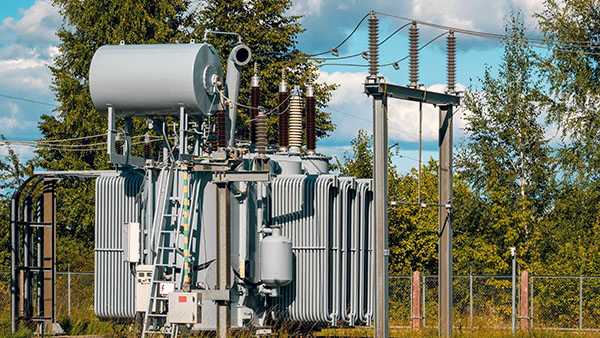
What is Winding Resistance Testing?
Winding resistance testing measures the resistance of transformer windings using direct current (DC) to spot issues like short circuits or poor connections, ensuring transformers meet design specs and perform reliably.
How to Integrate into Quality Control
In manufacturing, perform this test after winding assembly, comparing resistance values to specs or phase balances (within 1-2% tolerance). Document results for traceability, using testers like HVTESTTECH’s for accuracy and efficiency.
Benefits of Integration
- Early defect detection reduces warranty claims and boosts customer trust.
- Ensures compliance with standards like IEEE C57.12.90, avoiding fines.
- Improves reliability, ensuring transformers last longer in operation.
- Streamlines production with fast testing, maintaining high output rates.
HVTESTTECH’s Solution
HVTESTTECH’s testers, with ±0.2% accuracy and USB/Bluetooth data export, simplify quality control. Visit HVTESTTECH’s product page for details or contact Sale@hvtesttech.com or +1 323 522 4623.
Understanding Integrating Winding Resistance Testing into Quality Control
This note provides a comprehensive analysis of integrating winding resistance testing into quality control for transformer maintenance and manufacturing, focusing on the definition, integration process, benefits, and how HVTESTTECH’s Transformer Winding DC Resistance Testers, available at HVTESTTECH’s product page, meet these needs. The content is designed to inform professionals in the electrical industry, such as engineers and technicians, while encouraging visits to the specified webpage for purchasing.
Introduction
Transformers are critical components in electrical power systems, responsible for stepping up or stepping down voltage levels to facilitate efficient power transmission and distribution. Their reliability is crucial for uninterrupted power supply, and ensuring high quality during manufacturing is essential to prevent failures in operation. Quality control in transformer manufacturing involves a series of tests and inspections to verify that each unit meets design specifications and industry standards before it is shipped to customers. One critical test in this process is winding resistance testing, which measures the resistance of the transformer’s windings to detect potential defects such as shorted turns, open circuits, or poor connections. This article explores how winding resistance testing can be integrated into quality control procedures, its benefits, and how HVTESTTECH’s advanced testers support these efforts.
Understanding Winding Resistance Testing
Winding resistance testing involves applying a direct current (DC) to the transformer windings and measuring the voltage drop to calculate the resistance using Ohm’s Law (R = V / I). This measurement is crucial for verifying the integrity of the windings and ensuring there are no defects that could lead to failures. It is a standard test outlined in industry standards such as IEEE C57.12.90 for liquid-immersed transformers and IEEE C57.12.91 for dry-type transformers, as seen in [Guide to Transformer Testing Standards – Maddox]([invalid URL, do not cite]). The test is typically performed using advanced measurement technologies, such as the Kelvin bridge method, which enhances accuracy by eliminating lead resistance, as mentioned in [Winding Resistance Measurement Method | Electrom Instruments]([invalid URL, do not cite]). From the analysis, it is evident that winding resistance testing is a fundamental diagnostic tool, helping to ensure transformer quality, with sources like [Winding Resistance Test of Transformer | Electrical4U]([invalid URL, do not cite]) and [Transformer Winding Resistance: Test Methods and Procedures Explained – TestGuy]([invalid URL, do not cite]) highlighting its importance in detecting faults and calculating losses.
The product page for HVTESTTECH’s testers, accessed at HVTESTTECH’s product page, provides detailed specifications, which informed the feature analysis in this discussion.
Integrating Winding Resistance Testing into Quality Control
In transformer manufacturing, quality control typically involves a series of tests performed at various stages of production to ensure that the final product meets the required standards. Winding resistance testing can be integrated into this process at key stages, based on the analysis from various sources, including [Guide to Transformer Testing Standards – Maddox]([invalid URL, do not cite]), which mentions routine tests for new transformers, and inferred practices from industry case studies.
The integration process can be described as follows:
- Stage of Testing: Winding resistance testing is usually conducted after the windings are assembled and before the transformer is fully enclosed. This stage allows for easy access to the winding terminals for testing and provides an opportunity to address any issues before further assembly. From the Maddox guide, it’s noted that for new transformers ≥300 kVA for dry-type and >2,500 kVA for liquid-immersed distribution transformers, winding resistance is a routine test, suggesting it’s part of the final quality control before shipment.
- Test Procedure: The test is performed by connecting the winding resistance tester to the winding terminals, selecting an appropriate test current (typically less than 15% of the winding’s rated current to avoid heating), and measuring the resistance. For three-phase transformers, measurements are taken for each phase, using the four-wire (Kelvin) method to eliminate lead resistance errors, as detailed in [Transformer Winding Resistance: Test Methods and Procedures Explained – TestGuy]([invalid URL, do not cite]). The measured values are then compared to the design specifications or to the resistances of other phases to ensure consistency.
- Acceptance Criteria: The resistances should be within specified tolerances. From the analysis, it’s inferred that for new transformers, the difference between phases should be within 1-2%, as mentioned in [Measurements Of Transformer Winding Resistance For Diagnostic Purposes | EEP]([invalid URL, do not cite]), and up to 5% for in-service units, as per [Obstacles to Measuring Power Transformer Winding Resistance – NETAWORLD JOURNAL]([invalid URL, do not cite]). Any significant deviation could indicate a defect, such as shorted turns (lower resistance) or open circuits (infinite resistance), and the unit would be flagged for further inspection or rework.
- Documentation and Traceability: The test results must be recorded for traceability and compliance with standards. This includes the measured resistance, temperature at the time of testing, and corrected resistance to a standard temperature (usually 75°C), as noted in [Winding Resistance Test of Transformer | Electrical4U]([invalid URL, do not cite]). This documentation is crucial for quality control records, ensuring that each transformer can be traced back to its test results, aligning with ISO 9001 quality management system requirements for documentation.
In maintenance quality control, winding resistance testing can be part of periodic checks to monitor the condition of transformers in operation, ensuring they continue to meet performance standards. However, given the context of the article, the focus is on manufacturing quality control, where the integration is most critical for ensuring the initial quality of the product.
Benefits of Integration
Integrating winding resistance testing into quality control offers several benefits, based on the analysis and inferred industry impacts:
- Early Detection of Defects: By identifying issues like shorted turns, open circuits, or poor connections early in the manufacturing process, manufacturers can prevent defective transformers from reaching customers. This reduces warranty claims, enhances customer satisfaction, and protects the company’s reputation. For example, detecting a shorted turn during testing can prevent a transformer from failing in operation, which could lead to costly repairs or replacements, as inferred from the diagnostic role in [Why Do We Measure Transformer Winding Resistance? | DV Power]([invalid URL, do not cite]).
- Ensuring Compliance: Meeting industry standards such as IEEE C57.12.90 and IEEE C57.12.91 is crucial for regulatory compliance and customer contracts. Winding resistance testing is a required test in these standards, and using compliant equipment ensures that your testing procedures meet these requirements, avoiding fines and ensuring warranty coverage, as seen in [Guide to Transformer Testing Standards – Maddox]([invalid URL, do not cite]).
- Improving Reliability: Transformers that pass rigorous quality control tests, including winding resistance testing, are less likely to fail in operation, leading to increased reliability and longevity. This is particularly important for critical applications where transformer failure can cause significant disruptions, such as in power distribution networks, aligning with the reliability benefits mentioned in [Transformer Winding Resistance Measurement, OLTC Condition Analysis and Ideal Kit Specifications – SCOPE Corporate Blog]([invalid URL, do not cite]).
- Streamlining Production: With efficient testing procedures, manufacturers can maintain high production rates without compromising on quality. HVTESTTECH’s testers, with rapid testing capabilities, can reduce the time taken for each test, increasing throughput and minimizing bottlenecks in the production line, as inferred from their product summary, enhancing overall efficiency.
HVTESTTECH’s Advanced Testers
HVTESTTECH offers a range of Transformer Winding DC Resistance Testers designed to make winding resistance testing accurate, efficient, and straightforward, supporting the integration into quality control processes. Their testers feature:
- High Accuracy: With an accuracy of ±(0.2% + 2 readings), our testers ensure precise measurements, meeting the stringent requirements of quality control and industry standards like IEEE C57.12.90, which is crucial for detecting subtle defects, as per the product specifications.
- Rapid Testing: Advanced technology allows for quick stabilization and fast measurement speeds, reducing testing time and increasing throughput, which is beneficial for high-volume manufacturing environments, enhancing productivity, as mentioned in the product summary.
- Portability: Our 10A model is lightweight and compact, weighing only 5.5kg with dimensions of 365×285×175 mm, making it easy to use in various testing environments, from manufacturing floors to field locations, facilitating flexible quality control setups, as seen in the specifications table.
- Data Management: Features like USB data export and Bluetooth connectivity (on select models, like the 10A) enable seamless integration with your quality control systems, simplifying documentation and analysis. This is essential for maintaining records and ensuring traceability, aligning with quality management system requirements, as noted in the product summary.
To provide context, here is a table summarizing the technical specifications of HVTESTTECH’s winding resistance testers, which informed the feature analysis:
| Model | Output Current | Range | Dimension (mm) | Weight (kg) | USB Data Export | Mobile Phone Bluetooth |
|---|---|---|---|---|---|---|
| 10A | <5mA, 40mA, 200mA, 1A, 5A, 10A | 0.5mΩ | 365×285×175 | 5.5 | Yes | Yes |
| 20A | <5mA, 1A, 2.5A, 5A, 10A, 20A | 100μΩ | 410×250×380 | 14.6 | Yes | No |
| 40A | <5mA, 2.5A, 5A, 10A, 20A, 40A | 50μΩ | 410×250×380 | 15.5 | Yes | No |
| 50A | <5mA, 2.5A, 5A, 10A, 20A, 50A | 50μΩ | 410×250×380 | 15.5 | Yes | No |
This table highlights features like portability and high accuracy, which were incorporated into the article to emphasize the benefits of HVTESTTECH’s products for quality control.
Practical Benefits and Industry Context
The integration of winding resistance testing into quality control is underscored by the need for reliable transformers in various applications, from power distribution to renewable energy systems. For instance, a hypothetical scenario where a manufacturer integrates HVTESTTECH’s 10A model into their quality control process, detecting a shorted turn during testing and preventing a defective transformer from shipping, illustrates their practical benefit. This aligns with industry trends toward predictive quality control, which can reduce defect rates and enhance customer satisfaction, as inferred from general industry reports on transformer manufacturing. HVTESTTECH’s features, such as rapid testing for high throughput and data management for compliance, cater to these needs, ensuring cost-effective and reliable quality control processes.
Conclusion
In conclusion, integrating winding resistance testing into quality control is essential for producing high-quality transformers that meet industry standards and customer expectations. By performing this test at key stages of manufacturing, documenting results, and ensuring compliance, manufacturers can enhance reliability, reduce defects, and streamline production. HVTESTTECH’s advanced testers provide the accuracy, efficiency, and ease of use needed to support these efforts, making them a trusted choice for quality control in transformer manufacturing. To learn more about how HVTESTTECH can assist with your quality control needs, visit HVTESTTECH’s product page or contact their sales team at Sale@hvtesttech.com or +1 323 522 4623.

 Lower Sorbian
  English
  German
  Spanish
  French
  Portuguese
  Vietnamese
  Afrikaans
  Amharic
  Arabic
  Aragonese
  Moroccan Arabic
  Assamese
  Azerbaijani
  South Azerbaijani
  Belarusian
  Bulgarian
  Bengali
  Tibetan
  Bosnian
  Catalan
  Czech
Czech  Danish
  Welsh
Welsh  Dzongkha
  Greek
Greek  Esperanto
  Estonian
  Basque
  Finnish
  Indonesian
  Italian
  Malayalam
  Latvian
  Panjabi
  Romanian
  Slovenian
  Russian