
Product Catalog

An AC Resonant Test System is used to perform high-voltage testing on large electrical equipment, such as cables, transformers, and capacitors. It applies voltage through resonance to achieve high testing levels with lower input power. This system ensures equipment insulation integrity, detecting defects and preventing potential failures in power systems.
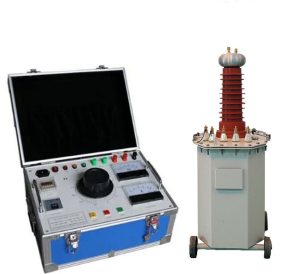
Transformer Winding DC Resistance Testers are used to measure the direct current resistance of transformer windings. This test identifies issues such as winding damage, loose connections, or poor contact, ensuring the transformer’s efficiency and reliability. Regular testing helps in early detection of potential problems, prolonging the transformer’s operational lifespan.

An Impulse Voltage Test System is designed to simulate lightning strikes and switching surges on electrical equipment, such as transformers, cables, and insulators. It generates high-voltage impulses to test the equipment’s ability to withstand transient overvoltages. This system is crucial for ensuring the durability and reliability of power systems.

A Cable Fault Locating System is used to identify and pinpoint faults in underground or overhead cables. It employs techniques like Time Domain Reflectometry (TDR) and acoustic detection to accurately locate issues such as breaks, shorts, or insulation failures. This system is vital for quick repairs and minimizing downtime.

HV DC Hipot Test Sets are used to perform high-voltage direct current (DC) testing on electrical equipment, such as cables, transformers, and switchgear. They assess the insulation’s ability to withstand high voltage without breakdown, ensuring the safety, reliability, and longevity of the equipment in power systems.
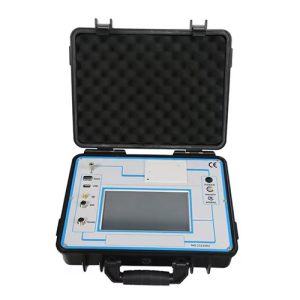
A Zinc-Oxide Arrester Tester (MOA) evaluates the condition and performance of metal oxide surge arresters (MOA) in power systems. It measures leakage current and resistance, detecting degradation or faults in the arrester. Regular testing ensures the arrester’s effectiveness in protecting electrical equipment from overvoltage events and extends its service life.
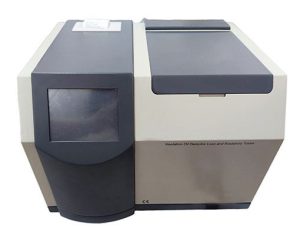
A Transformer Oil Tan Delta and Resistivity Tester measures the dissipation factor (tan delta) and electrical resistivity of transformer oil, key indicators of insulation quality. These tests detect moisture, contamination, and degradation in the oil, ensuring the transformer’s insulation system is in good condition, which is critical for reliable operation.

A Wireless High Voltage Phase Detector is a tool used to identify and verify the phase sequence and voltage presence in high-voltage power systems without direct contact. It enhances safety by allowing technicians to check phase alignment and voltage status remotely, making it crucial for maintenance and troubleshooting in electrical networks.

Primary Injection Test Systems with Temperature Test are used to evaluate the performance of protective devices like circuit breakers and relays under high current conditions. These systems inject large currents to simulate operational conditions while monitoring temperature rise, ensuring that the equipment functions correctly and safely under load without overheating.
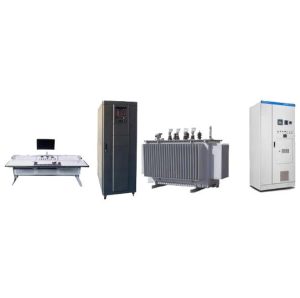
A Transformer Test System is used to perform comprehensive testing on transformers, assessing key parameters such as turns ratio, winding resistance, insulation integrity, and load/no-load losses. It ensures transformers meet performance standards, operate efficiently, and maintain reliability, helping prevent failures and extending the service life of the equipment.

A Transformer Induced Withstand Voltage Test Set is used to evaluate the dielectric strength of a transformer’s insulation by applying a higher-than-normal voltage. This test simulates operational stresses to ensure the transformer can withstand overvoltages without insulation breakdown, ensuring reliability and safety in power system operations.

A Three-Phase Voltage Regulator Stabilizer is designed to maintain consistent voltage levels in three-phase electrical systems. It automatically adjusts voltage fluctuations, ensuring stable power supply to sensitive equipment. This stabilizer protects against voltage spikes, sags, and imbalances, enhancing the reliability and performance of industrial and commercial electrical systems.

A Single Phase Manual Variac Transformer is a variable transformer that allows precise adjustment of output voltage in single-phase electrical systems. Operated manually, it provides a smooth voltage range from zero to maximum, making it ideal for testing, calibration, and controlling voltage-sensitive equipment in laboratories and industrial applications.

A Three Phase Oil Immersed Induction Voltage Regulator is designed to maintain stable voltage levels in three-phase electrical systems. Immersed in oil for enhanced cooling and insulation, it regulates voltage through induction. This regulator is commonly used in power distribution networks to ensure consistent and reliable voltage supply, protecting sensitive equipment.

The Underground Cable and Pipeline Locator accurately detects and measures the depth of underground utilities without excavation. Featuring GPS mapping, multiple frequency settings, and advanced anti-interference technology, it ensures precise location of cables and pipelines for safe, efficient excavation and maintenance.

The Handheld Three-Phase Power Quality Analyzer delivers precise monitoring of voltage, current, harmonics, and power factors in electrical systems. Compact and portable, it’s perfect for on-site testing and troubleshooting, helping ensure optimal power quality, system performance, and compliance with industry standards.

The Portable Power Quality Analyzer delivers precise analysis of voltage, current, harmonics, and power factors in electrical systems. With its compact and user-friendly design, it’s ideal for on-site testing and troubleshooting. This versatile tool ensures reliable power quality assessment and helps maintain optimal system performance in various environments.
 Spanish
  English
  German
  French
  Portuguese
  Vietnamese
  Afrikaans
  Amharic
  Arabic
  Aragonese
  Moroccan Arabic
  Assamese
  Azerbaijani
  South Azerbaijani
  Belarusian
  Bulgarian
  Bengali
  Tibetan
  Bosnian
  Catalan
  Czech
Czech  Danish
  Welsh
Welsh  Lower Sorbian
  Dzongkha
  Greek
Greek  Esperanto
  Estonian
  Basque
  Finnish
  Indonesian
  Italian
  Malayalam
  Latvian
  Panjabi
  Romanian
  Slovenian
  Russian