
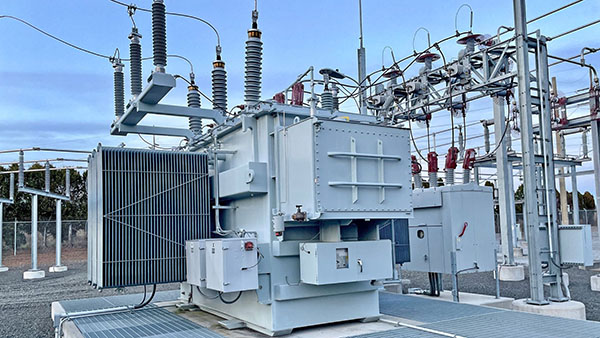
Explore the concept of the ideal transformer turn ratio and its significance in electric power systems. Learn how this ratio impacts efficiency, voltage regulation, and practical design for industry professionals.
Table of Contents
- Introduction: Why Transformer Turn Ratio Is Important
- Defining the Ideal Transformer Turn Ratio
- Real-World Applications of an Ideal Ratio
- Tools and Methods for Verifying Turn Ratio
- Personal Anecdote: Realizing the Power of Turn Ratio Fidelity
- Case Study: Transformer Upgrades Through an Ideal Ratio Lens
- Designing and Maintaining the Ideal Turn Ratio
- Best Practices for Consistent Turn Ratio Performance
- Common Challenges in Pursuing an Ideal Turn Ratio
- Future Trends in Turn Ratio Design and Testing
- Conclusion
- FAQ
1. Introduction: Why Transformer Turn Ratio Is Important
Transformers perform the critical function of stepping voltage levels up or down in electrical power systems, ensuring efficient transmission and distribution. At the core of every transformer is the turn ratio: a physical property reflecting how many windings exist on the primary coil compared to the secondary coil. Engineers refer to an “ideal transformer turn ratio” when describing the theoretical coil relationship that perfectly delivers the intended voltage transformation without additional losses. In practice, this ratio underpins system planning and protective relay calibration, meaning that even slight deviations can shape operational costs and reliability.
This article offers a deep dive into the concept of the ideal turn ratio, covering how coil design translates into real-world voltage shifts, why small deviations matter for large-scale industrial or utility applications, and the methods experts use to verify each transformer still meets its design benchmarks. Whether you’re an electrician in a distribution network or overseeing high-voltage substation expansions, understanding the “ideal ratio” perspective helps you spot coil anomalies and ensure stable power for end users.
2. Defining the Ideal Transformer Turn Ratio
2.1. Coil Count and Voltage Relationship
The turn ratio in a simplified sense is the ratio of primary winding turns (Np) to secondary winding turns (Ns), typically written as:
Turn Ratio = Np / Ns
For an “ideal” transformer in pure theory (i.e., no internal losses or magnetizing current leakage):
Vp / Vs = Np / Ns
- Vp: Primary voltage
- Vs: Secondary voltage
Hence, an ideal design ratio of, say, 10:1 means that if you apply 10,000 volts on the primary, you’ll get precisely 1,000 volts on the secondary—assuming no real losses or magnetizing currents. This ratio becomes the key stepping stone for designing how electricity transitions from generation voltages (e.g., 13.8 kV) to distribution or consumer-level voltages (e.g., 240 V).
2.2. Losses and Practical Deviations
Real transformers deviate from that ideal ratio due to the following influences:
- Copper (Load) Loss: Heat generation in windings under load can cause resistive drops, subtly altering the real operating ratio.
- Core (Iron) Loss: Magnetizing currents also push the ratio away from the perfect design figure.
- Stray Reactance: Mechanical tension, partial coil shifts, or manufacturing tolerances might yield small differences from nominal expectations.
Despite these factors, an ideal design ratio remains the benchmark. Transformers that stay close to their design ratio under various load conditions exhibit superior performance, minimal energy losses, and predictable behavior during faults or transitions.
3. Real-World Applications of an Ideal Ratio
Even if “ideal” is an abstraction, the concept is essential for:
- System Planning: Substation designers rely on specified ratio data to ensure parallel operations or to match local distribution voltages. A mismatch would lead to circulating currents or unbalanced loads.
- Relay Settings: Protective relays assume a certain ratio to interpret currents or voltages accurately. Any drift can compromise protective coordination across the grid.
- Equipment Upgrades: When adjusting a transformer for heavier loads or modernizing older units, the chosen coil arrangement centers on an “ideal ratio” that meets revised supply and demand parameters.
Professional Example: A municipality upgrading from 4.16 kV to 12.47 kV distribution might opt for a certain ideal ratio to scale voltages effectively without reconfiguring entire feeder lines extensively, trusting the transformer’s near-precise ratio to maintain power quality for industrial or commercial consumers.
4. Tools and Methods for Verifying Turn Ratio
Manufacturers and field technicians validate a transformer’s ratio regularly, ensuring it remains close to the “ideal” coil count relationship. Below are principal strategies:
4.1. Advanced Ratio Meters
- Function: Injects a low-level AC signal into the primary, detecting the induced voltage on the secondary to calculate ratio.
- Advantages: Straightforward, well-calibrated, minimal load stress. Common for routine maintenance or acceptance tests.
4.2. Load-Based Current Injection
- Purpose: Realistic, medium-level currents reveal whether coil expansions or partial shorted turns arise only under certain loads, bridging the gap between design ratio and in-service ratio.
- Who Uses It? Typically engineering teams verifying critical substation transformers or those with signs of mechanical coil tension from shipping or operation.
4.3. Smart Monitoring Solutions
- Concept: On-line sensors gather coil data, comparing real-time transformations with nameplate specs or predicted models.
- Benefit: Flags ratio anomalies soon after they begin, prompting proactive coil maintenance or load rebalancing.
5. Personal Anecdote: Realizing the Power of Turn Ratio Fidelity
Some years ago, I assisted a rural substation modernization project. The lead engineer insisted that routine ratio meter checks alone sufficed to confirm coil specs. However, mild but consistent under-voltage complaints surfaced from a local manufacturer attached to this substation. On a hunch, I conducted additional load-based ratio measurements. Sure enough, the tested coil ratio under moderate load dipped more than expected, signifying some coil misalignment or partial winding defect. Rewinding those coil sections restored the transformer’s ratio to its near-ideal design, stabilizing the manufacturer’s process lines and saving them from unpredictable motor stalls.
Lesson Learned: The difference between a purely “ideal ratio” test at no-load and a load-based approach can unearth coil stress not visible in simpler checks, safeguarding system performance.
6. Case Study: Transformer Upgrades Through an Ideal Ratio Lens
Setting
A mid-sized utility sought to upgrade aging distribution transformers to handle newly built commercial loads. The existing 4.16 kV to 480 V systems were on the edge of capacity, sometimes sagging under peak demand. Instead of a direct swap, engineers reevaluated the turn ratio design, opting for a refined ratio ensuring tighter voltage regulation for all downstream feeders.
Approach
- Factory Acceptance Testing: Verified ratio meter readings and partial load injection matched the re-specified ratio requirements within ±0.3% tolerance.
- On-Site Commissioning: Post-delivery ratio tests validated minimal shipping stress, and alignment with the new ratio design goals.
Outcome
- Stable Voltage for Commercial Clients: Retail shops, offices, and restaurants no longer experienced evening dips as local motors and cooling systems kicked in.
- Fewer Relay Complaints: Protective devices functioned seamlessly, avoiding spurious trips from borderline voltage triggers.
Key Takeaway: Intentionally selecting an ideal ratio that suits evolving load patterns can yield significant reliability gains, especially if each new transformer’s real performance remains close to that design ratio under field conditions.
7. Designing and Maintaining the Ideal Turn Ratio
From an engineering perspective, specifying coil windings to achieve a certain ratio is just the beginning. Post-factory, that “ideal” figure can drift if coil mechanical bracing loosens, partial internal shorts appear, or insulation deteriorates. Over time, any significant mismatch can hamper voltage stability or burden protective schemes with inaccurate assumptions about fault levels.
- Manufacturing Rigor: Precisely wound coils, quality insulation materials, and robust mechanical structures help maintain near-ideal ratios over the transformer’s operational life.
- Regular Field Testing: Periodic ratio checks, especially for high-capacity or critical transformers, confirm whether design specs still hold.
- Tap Changer Adjustments: Many distribution or substation transformers incorporate on-load tap changers, letting operators correct minor ratio deviations to sustain system voltage targets.
8. Best Practices for Consistent Turn Ratio Performance
- Frequent Monitoring: For high-demand networks, embed ratio checks into annual maintenance or tie them to SCADA-based analyses for faster anomaly detection.
- Staff Training: Educate operators and field electricians on the nuances of advanced ratio meters or load injection tests, ensuring accurate data gathering.
- Systemic Data Correlation: Couple ratio measurements with feeder load logs or protection device event records to discern deeper coil or load interplay patterns.
- Prompt Corrective Action: If a ratio reading consistently skews from design, investigate coil structure or re-check insulation. Rewinding or mechanical braces might be the fix to restore the ideal ratio vantage.
Professional Reminder: Always align your ratio testing approach with recognized standards (IEEE, IEC) and manufacturer guidelines, particularly for large or specialized transformers where minor coil issues can become major disruptions.
9. Common Challenges in Pursuing an Ideal Turn Ratio
Striving to keep a transformer’s ratio near its original blueprint involves anticipating or mitigating typical pitfalls that shift real performance away from that “ideal” relationship.
- 9.1. Winding and Insulation Limitations
- 9.2. Manufacturing Tolerance and Quality
- 9.3. Environmental and Operational Stresses
9.1. Winding and Insulation Limitations
Issue:
- Coil expansions over time, mechanical tension from repeated load cycles, or partial discharges degrade windings, shifting ratio dynamics.
Remedies:
- Quality Materials and Bracing: Good design practices using robust insulation and mechanical clamping significantly reduce coil shift risks.
- Routine Diagnostics: Compare coil resistance or partial discharge data with ratio readings for a broader health check.
9.2. Manufacturing Tolerance and Quality
Issue:
- Coil winding inaccuracies or subpar insulation layering can cause a difference from the intended ratio right off the production line.
Solutions:
- Factory Acceptance Tests: Confirm ratio compliance and mechanical sturdiness at the OEM’s facility before acceptance.
- Vendor Audits: Check the manufacturer’s track record and ensure they adhere to relevant IEC, IEEE, or internal corporate specs for winding precision.
9.3. Environmental and Operational Stresses
Issue:
- Switching surges, harmonics from heavy industrial drives, or extremes in temperature/humidity can alter coil integrity or the magnetizing current path.
Remedies:
- Data-Logging Technology: Sensors that track coil temperature or partial discharge events can warn of emergent ratio drifts.
- System Upgrades: Installing harmonic filters or ensuring stable supply lines helps preserve an ideal ratio during day-to-day load transitions.
10. Future Trends in Turn Ratio Design and Testing
As the electric power industry shifts towards digital transformation and higher efficiency benchmarks, coil ratio design and verification are advancing in parallel:
- Robotic Coil Winding: Automated systems reduce human errors, delivering near-perfect coil layering and alignment that keeps actual ratio extremely close to design specs.
- IoT-Enabled Coil Sensors: Embedding micro-sensors in windings provides real-time ratio approximations, alerting operators if the ratio drifts under variable loads.
- Augmented Reality (AR) Maintenance: Field technicians can overlay real-time ratio data and coil diagrams while inspecting a transformer physically, bridging the design blueprint with immediate coil conditions.
Projection: Over the coming decade, advanced manufacturing and integrated sensor technologies will narrow the gap between nominal coil design and in-service ratio performance, minimizing energy losses and mechanical coil stresses.
11. Conclusion
The term “ideal transformer turn ratio” captures the essence of a perfect coil arrangement that transforms voltages precisely as designed—free of real-world losses or mechanical nuances. Achieving and sustaining a near-ideal ratio fosters stable voltage regulation, accurate protective relay operations, and efficient distribution. Though real transformers inevitably deviate from these perfect parameters under load or over time, mindful checks and modern manufacturing methods can keep them close enough to preserve reliable grid operations.
Key Takeaway: Knowledge of the ideal ratio concept helps industry professionals judge whether a transformer’s actual coil layout and in-service performance remain aligned with design criteria. Through systematic testing, quick detection of coil shifts, and robust maintenance strategies, electricians ensure the reliability, cost-efficiency, and safety of power supply systems.
12. FAQ
- Is the ideal turn ratio always the actual ratio in a transformer?
Not necessarily. Ideal ratio refers to the design coil arrangement, but real-world losses (copper/iron) or mechanical deviations can shift the practical ratio slightly. - Why is it important to stay close to this ideal ratio?
Accuracy in ratio ensures correct voltage steps, stable protective relays, minimal stray losses, and overall better longevity of the transformer. - Does load-based testing reveal more about a coil’s true ratio than no-load checks?
Yes. Load-based or current injection methods unmask coil expansions or partial winding defects that might remain unseen under simpler, no-load ratio meter tests. - How can I detect if a transformer’s ratio is drifting away from nominal?
Periodic ratio measurements compared with prior logs is the simplest route. If deviations exceed tolerance, coil stress or insulation damage may be responsible. - Are advanced sensors replacing conventional ratio meter approaches?
Sensors and IoT solutions augment existing tests but don’t fully replace them. In-person ratio checks remain invaluable for conclusive mechanical analysis and manufacturer compliance. - Can re-tapping adjust a transformer ratio to be “more ideal”?
Tap changers tweak output voltage within certain bounds but can’t fix major coil misalignment or mechanical tension issues. They help regulation, not fundamental coil flaws. - What typical tolerances are acceptable for a well-made transformer’s ratio?
Many distribution and power units hold ±0.5% or tighter. Specialized equipment might demand ±0.1% or narrower to fulfill stringent precision criteria. - Is a transformer’s ratio affected by age or environment alone?
Age, temperature swings, moisture infiltration, or mechanical vibration can degrade windings, shifting the ratio. Routine inspections identify early anomalies. - What if the nameplate ratio never matched real measurements from day one?
This points to possible manufacturing tolerance issues or on-site coil displacement. Immediate rectification—like partial rewinding or re-bracing—can restore intended performance. - Could a near-perfect ratio still yield suboptimal transformer operation?
If other parameters (like winding insulation or overall design) are compromised, coil ratio alone can’t guarantee efficiency. A thorough approach combining ratio checks with insulation, partial discharge, and load profile data is essential.
Author’s Note: Always consult manufacturer guidelines and industry standards (IEEE/IEC) to confirm ratio tolerances, ensure the correct test methods, and maintain safe practices when handling or diagnosing transformers of any voltage class.

 Spanish
  English
  German
  French
  Portuguese
  Vietnamese
  Afrikaans
  Amharic
  Arabic
  Aragonese
  Moroccan Arabic
  Assamese
  Azerbaijani
  South Azerbaijani
  Belarusian
  Bulgarian
  Bengali
  Tibetan
  Bosnian
  Catalan
  Czech
Czech  Danish
  Welsh
Welsh  Lower Sorbian
  Dzongkha
  Greek
Greek  Esperanto
  Estonian
  Basque
  Finnish
  Indonesian
  Italian
  Malayalam
  Latvian
  Panjabi
  Romanian
  Slovenian
  Russian