
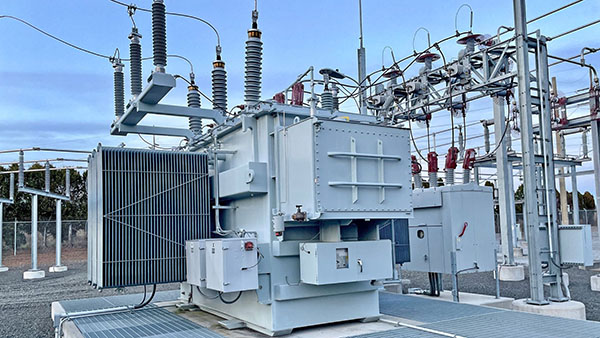
Discover the four fundamental types of transformer tests, why they matter, and how to conduct them to ensure reliability, efficiency, and safety in the electric power industry.
1. Introduction: The Necessity of Transformer Testing
Transformers serve as the backbone of electrical power systems, adjusting voltage levels to facilitate safe and efficient power transmission and distribution. Given their critical role and complexity, regular transformer testing is indispensable. Proper testing provides early warnings of potential failures, optimizes performance, ensures safety, and extends a transformer’s operational life.
Key Reasons to Test Transformers
- Preventing Failures: Early detection of insulation breakdown or winding damage helps prevent catastrophic faults.
- Ensuring Efficiency: Validating operational efficiency underpins stable power delivery and cost savings.
- Enhancing Safety: Identifying arcing or thermal anomalies is vital for protecting both equipment and personnel.
- Data-Driven Maintenance: Comprehensive test data informs predictive maintenance schedules and reduces downtime.
Key Insight: Effective testing is the foundation for reliability, uptime, and safety in power systems, especially where transformers are pivotal.
2. Overview: Four Core Types of Transformer Tests
Despite the myriad of diagnostic procedures available, transformer testing typically clusters into four broad categories:
- Routine Tests
- Type Tests
- Special Tests
- Field Tests
Each category addresses different objectives, from confirming basic operational parameters to simulating real-world conditions. Deciding which tests to perform often depends on the transformer’s lifecycle stage (e.g., new installation, post-repair) and the specific requirements of the power system environment.
3. 1) Routine Tests
3.1. Purpose of Routine Tests
Routine tests are typically performed on every transformer before it leaves the manufacturing facility and at set intervals during its operational life. They provide a baseline of performance, verifying that the unit meets essential functional criteria.
Primary Goals of Routine Tests
- Quality Assurance: Confirm that newly manufactured transformers comply with design specifications.
- Periodic Validation: Detect early signs of wear or degradation in aging transformers.
- Safety Compliance: Ensure that the transformer adheres to relevant industry standards and safety guidelines.
3.2. Common Routine Tests
- Winding Resistance Measurement
- Objective: Identify winding integrity, spot shorted turns or loose connections.
- Procedure: Use a calibrated multimeter or specialized resistance meter on each winding, comparing results with reference values.
- Insulation Resistance Test
- Objective: Evaluate insulation health to avoid short circuits.
- Procedure: Apply a high DC voltage (using a Insulation Resistance Testers) between windings and ground, noting any substantial resistance drop.
- Ratio and Polarity Check
- Objective: Confirm the correct primary-to-secondary turns ratio.
- Procedure: Inject a low AC voltage on the primary, measure the secondary voltage, and validate the ratio matches design specs.
Practical Tip: For transformers in service, scheduling these tests annually or biennially helps detect subtle shifts in performance, guiding proactive maintenance decisions.
4. 2) Type Tests
4.1. Significance of Type Tests
Type tests confirm that a transformer design meets the performance and safety standards set by industry regulations. These tests are typically executed on prototype models rather than on every produced unit, though some customers may request them for specific batches.
Why Type Tests Matter
- Design Validation: Ensures that the transformer can handle conditions such as surge voltages or short-circuit forces.
- Regulatory Compliance: Confirms adherence to established standards (e.g., IEEE, IEC).
- Customer Assurance: Provides end-users with evidence of the transformer’s ability to meet guaranteed performance levels.
4.2. Typical Type Tests
- Temperature Rise Test
- Objective: Validate that windings and insulation can withstand rated current without exceeding temperature limits.
- Approach: Load the transformer to its rated capacity in a controlled environment, measuring winding and oil temperatures over time.
- Lightning Impulse Test
- Objective: Confirm the transformer’s resilience against high-voltage surges (e.g., lightning strikes).
- Approach: Apply a standardized impulse voltage wave, observing insulation performance under transient stress.
- Short-Circuit Withstand Test
- Objective: Demonstrate the transformer’s mechanical and thermal strength under fault currents.
- Approach: Apply short-circuit conditions, ensuring the unit can withstand the stresses without critical deformation or failure.
Case Note: Succeeding in type tests is essential before mass production or large-scale deployment to guarantee design robustness.
5. 3) Special Tests
5.1. Scenarios for Special Tests
Special tests are performed under unique circumstances, often in response to specific operational concerns. They may arise from new site conditions or unusual performance metrics discovered during routine monitoring.
Common Motivations
- Unusual Operating Environments: High altitudes, corrosive atmospheres, or extreme temperatures.
- Post-Fault Assessments: Evaluating damage after a short circuit or lightning strike.
- Upgrades or Retrofits: Verifying that changes in load or system parameters do not compromise transformer performance.
5.2. Examples of Special Tests
- Dissolved Gas Analysis (DGA)
- Objective: Detect internal faults (e.g., overheating, partial discharge, arcing) by analyzing gases in the transformer oil.
- Value: Highly predictive, allowing for timely maintenance.
- Partial Discharge Testing
- Objective: Identify early insulation degradation through PD signals.
- Relevance: Pinpoints localized weak spots that might lead to insulation breakdown or arcing.
- Frequency Response Analysis (FRA)
- Objective: Detect mechanical shifts or deformations in windings due to faults or aging.
- Approach: Compare the transformer’s frequency response signature against a baseline to spot anomalies.
Pro Tip: Special tests often involve advanced instrumentation and expert interpretation, providing valuable insights into potential failure modes.
6. 4) Field Tests
6.1. Why Field Tests Matter
Field tests bridge the gap between factory conditions and real-world scenarios. Conducted on-site, these tests verify that a transformer performs optimally in its actual operational environment, factoring in load variations, temperature extremes, and unique site challenges.
Field Test Advantages
- Realistic Conditions: Simulate actual load demands, ambient temperatures, and system interactions.
- Immediate Issue Detection: Identify site-specific faults or mismatches (e.g., inadequate cooling capacity).
- Validation of Installation: Ensure proper grounding, bushing connections, and cable terminations.
6.2. Typical Field Testing Procedures
- Load Test
- Goal: Confirm efficiency and voltage regulation under actual or simulated load conditions.
- Approach: Use a load bank or the facility’s normal load to measure performance metrics like voltage drop, current draw, and power factor.
- Thermal Imaging
- Goal: Identify hotspots or uneven heating that might indicate winding or connection issues.
- Approach: Infrared cameras scan the transformer under normal or peak loads, capturing thermal profiles.
- Vibration Analysis
- Goal: Detect mechanical imbalances or resonances that could harm internal components.
- Approach: Attach vibration sensors to the transformer’s core or tank, measuring amplitude and frequencies over time.
Note: Field tests, especially on large transformers, require careful planning and safety measures to prevent accidents or damage to the equipment.
7. Best Practices for Transformer Testing
Implementing best practices ensures that all four categories of transformer tests deliver accurate, reliable results and contribute to overall system resilience.
- Follow Manufacturer Specifications
- Adhere to Provided Guidelines: Use recommended voltage levels, test durations, and interpretative criteria.
- Calibration: Keep instruments calibrated to maintain measurement integrity.
- Schedule Regularly
- Routine Maintenance: Incorporate routine tests into annual or biennial schedules.
- Condition-Based Intervals: Adjust frequency based on operating environment, load levels, or historical performance data.
- Combine Multiple Tests
- Holistic View: Cross-reference data from insulation checks, ratio tests, DGA, and partial discharge scans for comprehensive insights.
- Trend Analysis: Compare current results against historical baselines to spot evolving faults.
- Document Thoroughly
- Record and Store Data: Maintain detailed logs of all tests, including date, instrument used, and measurements.
- Trend Monitoring: Use software platforms to track changes over time, enabling predictive maintenance.
- Ensure Safety
- PPE Usage: Wear insulated gloves, goggles, and flame-resistant clothing during testing.
- Lockout-Tagout Procedures: De-energize and isolate transformers when required to avoid accidental energization.
Key Takeaway: Methodical testing strategies, aligned with best practices, maximize transformer uptime, forestall crises, and optimize system performance.
8. Personal Anecdote: When Routine Tests Saved a Major Substation
Several years ago, I worked on a substation project that supplied power to a large manufacturing district. During routine tests—specifically insulation resistance measurements—we discovered an abnormally low reading on one of the distribution transformers. Further inspection revealed contaminated oil and partial discharge activity. This early detection allowed us to schedule immediate maintenance, replace compromised insulation, and clean the internal components.
Had we not identified the issue through these routine tests, the transformer would likely have failed during peak production hours, causing widespread outages and financial losses for the manufacturing district.
Lesson Learned: Regular routine tests act as a frontline defense against unforeseen transformer failures that can cripple entire operations.
9. Case Study: Special Tests Prevented Costly Downtime
Setting
A high-capacity power transformer at a research facility began showing intermittent voltage fluctuations. Basic diagnostics revealed no obvious anomalies, prompting the facility manager to consider specialized testing.
Approach
- Partial Discharge Testing
- Identified localized discharge events within the transformer’s insulation.
- Dissolved Gas Analysis (DGA)
- Detected elevated levels of acetylene and ethylene, indicating potential insulation degradation or arcing.
- Frequency Response Analysis (FRA)
- Confirmed subtle mechanical shifts in the windings, likely due to past fault currents.
Outcome
- Early Repairs: Technicians replaced compromised insulation sections and reinforced the windings before a catastrophic failure occurred.
- Minimized Downtime: Addressing issues proactively avoided a potential large-scale outage that would have halted critical research activities.
- Cost Savings: The facility saved considerable funds by preventing emergency repairs and production losses.
Key Takeaway: Special tests, including partial discharge and DGA, can reveal evolving faults not detectable through simpler procedures, preventing large-scale disruptions.
10. Future Trends in Transformer Testing
As technology evolves, transformer testing methodologies are becoming more advanced, efficient, and proactive.
10.1. Digital Twin Modeling
- Virtual Replicas: Digital twins simulate real transformers, predicting performance under various conditions.
- Enhanced Maintenance Planning: Allows for more accurate load forecasting and proactive interventions.
10.2. Smart Sensors and IoT Integration
- Real-Time Monitoring: Sensors within transformers transmit continuous data on temperature, humidity, and partial discharge activity.
- Automated Alerts: Systems can instantly notify operators of critical parameter deviations.
10.3. AI-Driven Analytics
- Predictive Maintenance: Machine learning models analyze historical and real-time test data to anticipate transformer failures.
- Comprehensive Diagnostics: AI identifies patterns in multiple test datasets (e.g., insulation, partial discharge, DGA) for holistic insights.
Future Insight: Embracing these technologies will further streamline the four basic types of transformer tests, enhancing system reliability and cutting maintenance costs.
11. Conclusion
In the electric power industry, transformer testing is crucial for ensuring operational continuity, efficiency, and safety. Although numerous diagnostic procedures exist, the **four basic types of transformer tests—Routine Tests, Type Tests, Special Tests, and Field Tests—**form the backbone of any comprehensive testing strategy. Each category addresses different aspects of transformer health, from initial design validation to on-site performance under real-world conditions.
By embracing best practices in planning, executing, and documenting these tests, industry professionals can reliably prevent transformer failures, reduce operational risks, and optimize power system performance. Personal anecdotes and case studies highlight the tangible benefits of adopting these methods, illustrating how early detection of faults averts costly outages and extends transformer lifespans.
Key Takeaway: Implementing a structured and consistent testing protocol ensures that transformers maintain optimal performance, fulfilling their critical role in the power grid. Integrating advanced technologies and adhering to industry standards further elevates the effectiveness of transformer testing, safeguarding both infrastructure and personnel.
FAQ
- What are the four basic types of transformer tests?
- Routine Tests (periodic checks), Type Tests (design validation), Special Tests (unique operational scenarios), and Field Tests (on-site performance assessment).
- How do routine tests differ from special tests?
- Routine tests are regularly scheduled and check essential parameters, while special tests target specific issues or conditions (e.g., unusual environments, post-fault analysis).
- Why are type tests conducted only on some transformers?
- Type tests validate a transformer’s design, often performed on prototypes or specific models rather than every unit, ensuring the design meets industry standards.
- Can field tests replace factory tests entirely?
- No, field tests complement factory tests but cannot fully replicate controlled laboratory conditions essential for certain design verifications.
- Which test is most critical for catching internal insulation issues early?
- Dissolved Gas Analysis (DGA) stands out for its ability to detect internal faults like arcing or insulation degradation before visible failure occurs.
- Are all special tests optional?
- Special tests may be mandated by operational contexts or after certain events (e.g., major fault). They are essential in specific scenarios but not as frequent as routine tests.
- Do advanced technologies like IoT sensors reduce the need for these four test types?
- While IoT and real-time monitoring offer supplementary data, the four basic test types remain fundamental for comprehensive transformer health assessment.
- How often should routine tests be carried out?
- Typically, annual or biennial intervals are common, but high-stress or critical transformers may require more frequent checks.
- What role does calibration play in effective transformer testing?
- Calibration ensures measurement accuracy, critical for detecting subtle parameter shifts indicative of evolving faults.
- Can advanced AI-driven models predict transformer failures better than traditional tests?
- AI enhances data analysis by identifying complex patterns but cannot replace the four basic test types, which remain essential for direct and confirmatory measurements.
Author’s Note: Always comply with manufacturer guidelines and industry standards (such as IEEE, IEC) when conducting transformer tests. Proper training, safety protocols, and the use of calibrated instruments are vital for accurate diagnostics and maintaining the reliability of power systems.

 Slovenian
  English
  German
  Spanish
  French
  Portuguese
  Vietnamese
  Afrikaans
  Amharic
  Arabic
  Aragonese
  Moroccan Arabic
  Assamese
  Azerbaijani
  South Azerbaijani
  Belarusian
  Bulgarian
  Bengali
  Tibetan
  Bosnian
  Catalan
  Czech
Czech  Danish
  Welsh
Welsh  Lower Sorbian
  Dzongkha
  Greek
Greek  Esperanto
  Estonian
  Basque
  Finnish
  Indonesian
  Italian
  Malayalam
  Latvian
  Panjabi
  Romanian
  Russian