
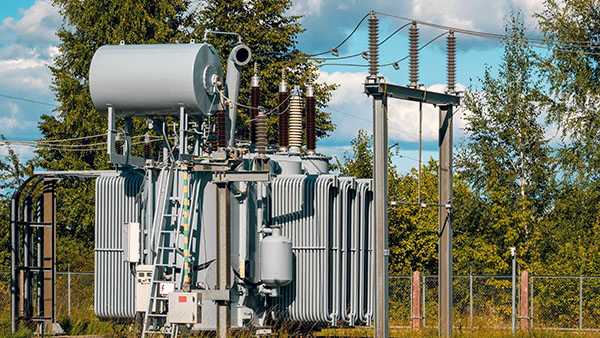
Discover what the tan delta test is, how it evaluates insulation health, and why it’s essential in the electric power industry.
1. Introduction: Importance of Tan Delta Testing
In high-voltage equipment like transformers, power cables, circuit breakers, and bushings, insulation integrity is critical for reliable operation and safety. Over time, insulation can degrade due to thermal stress, mechanical vibration, environmental contaminants, and aging. The tan delta test (also known as the dissipation factor or loss angle test) is a diagnostic method that quantifies this degradation.
Why it matters:
- Prevents Unexpected Failures: Early detection of compromised insulation can avoid costly downtime and dangerous faults.
- Cost Efficiency: Targeted maintenance based on real test data helps you invest resources where they’re needed most.
- Regulatory Compliance: Many standards (IEEE, IEC, etc.) recommend or require periodic tan delta measurements to uphold performance criteria.
Key Takeaway: The tan delta test is a powerful, non-destructive tool that measures the dielectric losses within insulation, indicating how well it can sustain electrical stress.
2. How Does the Tan Delta Test Work?
When an AC voltage is applied to an insulating material, two key electrical components come into play:
- Capacitive Current (IC): The “ideal” current that should flow if the insulation were purely capacitive, with zero real power loss.
- Resistive Current (IR): The real (lossy) component of the current associated with heat generation and energy dissipation.
Tan delta ( tanδ ) is the ratio of the resistive current to the capacitive current:
tanδ=IR/IC
A higher tanδ value suggests the insulation is experiencing more leakage or conduction losses—often a sign of contamination, moisture, or aging.
3. Key Parameters and Interpretations
When analyzing tan delta test results, you’ll see:
- Dielectric Loss Factor: Directly proportional to tanδ\tan \deltatanδ. High losses hint at breakdown mechanisms.
- Capacitance: Changes in measured capacitance may indicate mechanical shifts or moisture intrusion.
- Temperature Sensitivity: Tan delta typically increases with temperature, so be consistent with test temperature or apply corrections.
Interpretation Guidelines:
- Low tanδ: Generally good insulation quality.
- Moderate tanδ: May require monitoring if trending upward over time.
- High tanδ: Often signals immediate attention—possible contamination, moisture ingress, or severe insulation damage.
4. Step-by-Step Tan Delta Testing Procedure
4.1. Preparation
- De-energize the Equipment: Safety first—confirm the circuit is isolated.
- Clean and Dry: Remove surface dirt or moisture that could skew results.
- Identify Test Points: Typically at bushings or terminals, ensuring you have proper connections for both the test leads and grounding.
4.2. Equipment Setup
- Tan Delta Bridge or Analyzer: Modern tan delta test sets often feature built-in measuring circuits for both capacitance and loss.
- Voltage Source: The test kit should supply the required AC voltage.
- Connection Leads: Use shielded cables to reduce interference, and ensure connections are tight and corrosion-free.
4.3. Ramp-Up and Measurement
- Apply Voltage Incrementally: Increase from a low level to the desired test voltage (commonly between 0.5 and 2.0 times the rated voltage) in steps.
- Record Readings at Each Step: Capture both tanδ and capacitance.
- Hold at Full Test Voltage: Stabilize for a predefined duration (e.g., one minute) and note the final readings.
4.4. Analyze Results
- Compare Against Baseline: Historical data or manufacturer specifications are crucial.
- Repeat at Different Temperatures: Optional but recommended if temperature influences might be suspected.
- Look for Rapid Increases in tanδ with voltage, suggesting partial discharge or near-breakdown conditions.
5. Practical Guidelines and Safety Tips
- Follow Standard Procedures: Always consult the manufacturer’s recommended methods and recognized standards like IEEE 286 or IEC 60885.
- Calibrate Your Instruments: Inaccurate measurement equipment leads to misleading conclusions.
- Account for Temperature: Record ambient and equipment temperatures; if they fluctuate significantly, apply the relevant correction factors.
- Use Proper Grounding: This prevents floating potentials and ensures operator safety.
- Document Everything: Keep detailed logs of voltage levels, tanδ\tan \deltatanδ values, dates, and atmospheric conditions to track trends over time.
6. Personal Anecdote: A Surprising Cable Failure
Years ago, I was tasked with diagnosing sporadic outages in a mid-voltage industrial feed. Despite decent insulation resistance readings, the cable kept tripping offline under load. After running a tan delta test, we found unusually high dissipation factors at normal operating voltage. It turned out that micro-cracks in the cable’s outer jacket had allowed moisture ingress, which standard insulation resistance tests didn’t fully detect. Thanks to tan delta, we zeroed in on the moisture problem, replaced the cable section, and eliminated the outages for good.
Lesson Learned: Sometimes, only a specific test like tan delta can catch subtle insulation issues that remain hidden from more routine checks.
7. Case Study: Tan Delta Testing on Large Transformer Bushings
Setting
A regional utility operates multiple 230 kV transformers with porcelain bushings. Over time, they noticed unusual partial discharge readings and oil leaks in one unit’s bushing.
Approach
- Offline Tan Delta Testing: With the transformer out of service, technicians placed test leads on the suspect bushing terminals, measuring tanδ at rated voltage.
- Comparison with Baseline: Historical data showed a 50% increase in tanδ, pinpointing severe internal contamination or cracking.
- Detailed Inspection: The team drained some oil, discovered hairline fractures and moisture-laden cellulose near the bushing’s flange.
Outcomes
- Prevented Catastrophic Failure: Early detection avoided a bushing explosion and potential fire hazard.
- Targeted Refurbishment: Only the problematic bushing was replaced, cutting costs versus swapping out the entire set.
- Improved Safety: Workers gained confidence that bushings were now under strict surveillance for future anomalies.
8. Future Trends in Tan Delta Testing
- Online Tan Delta Monitoring: Increasingly, systems can measure dielectric losses without de-energizing equipment, minimizing downtime.
- Integration with Partial Discharge Analytics: Coupling PD data and tanδ results offers a more comprehensive insulation health snapshot.
- Machine Learning Algorithms: AI could predict insulation failure timelines based on trending tanδ data, environmental factors, and operational loads.
- Portable, Lightweight Test Kits: Advancements in electronics are producing smaller, more user-friendly devices with high accuracy, benefiting field technicians.
9. Conclusion
Tan delta testing is a cornerstone of modern electrical asset management. By measuring the dissipation factor, you gain insight into the dielectric health of transformers, cables, bushings, and other high-voltage equipment. Low values generally indicate robust insulation, while higher readings or rapid escalation signal a need for maintenance or repairs.
Key Takeaway: Whether you’re dealing with distribution cables, substation transformers, or intricate industrial setups, the tan delta test often catches degradation early, saving time, money, and possibly lives. As technology continues to evolve, expect even more convenient and precise tan delta solutions that integrate seamlessly with other diagnostics, pushing reliability in the electric power industry to new heights.
FAQ
- How often should tan delta tests be conducted?
- It depends on equipment criticality and usage. High-value or heavily loaded assets might need annual tests, while less critical devices may go 2–3 years or more.
- Is tan delta testing destructive?
- No, it’s generally non-destructive. The test voltages are within normal operating levels or slightly higher for stress checks.
- What if tan delta values are stable but still relatively high?
- Stability is good, but high absolute values warrant closer inspection and trending. Compare to manufacturer’s benchmarks or earlier measurements.
- Can environmental factors skew tan delta results?
- Yes. High humidity, dust, or contaminants can affect the data. Clean equipment before testing, and record temperature/humidity for reference.
Author’s Note: Always refer to recognized standards (e.g., IEEE 286, IEC 60885) for definitive guidelines on test voltages, durations, and acceptance criteria. Employ trained professionals and maintain rigorous safety procedures when handling high-voltage equipment.

 Vietnamese
  English
  German
  Spanish
  French
  Portuguese
  Afrikaans
  Amharic
  Arabic
  Aragonese
  Moroccan Arabic
  Assamese
  Azerbaijani
  South Azerbaijani
  Belarusian
  Bulgarian
  Bengali
  Tibetan
  Bosnian
  Catalan
  Czech
Czech  Danish
  Welsh
Welsh  Lower Sorbian
  Dzongkha
  Greek
Greek  Esperanto
  Estonian
  Basque
  Finnish
  Indonesian
  Italian
  Malayalam
  Latvian
  Panjabi
  Romanian
  Slovenian
  Russian