
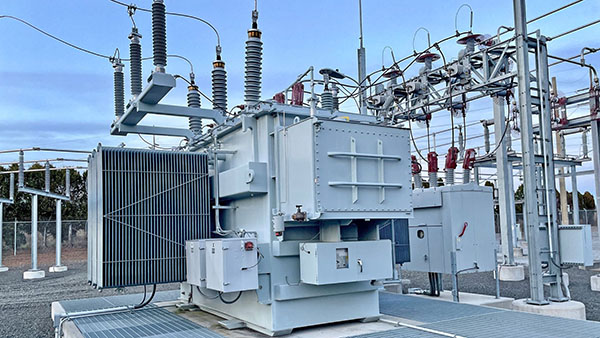
What is Winding Resistance Testing?
Winding resistance testing measures the resistance of transformer windings using direct current (DC) to detect faults like shorted turns or poor connections, ensuring transformers operate efficiently and reliably.
How Automation Maximizes Efficiency
Automated winding resistance testers reduce setup time, minimize human errors, and allow simultaneous testing of multiple phases, speeding up the process. They also offer features like automatic data logging and temperature correction, making testing faster and more accurate.
HVTESTTECH’s Automated Testers
HVTESTTECH’s Transformer Winding DC Resistance Testers, available at this website, include models with rapid testing and Bluetooth connectivity, enhancing efficiency. Contact them at Sale@hvtesttech.com or +1 323 522 4623 for more details.
Understanding Maximizing Efficiency with Automated Winding Resistance Testers
This note provides a comprehensive analysis of maximizing efficiency with automated winding resistance testers for transformer maintenance, focusing on the definition, importance, features of automation, benefits, and how HVTESTTECH’s Transformer Winding DC Resistance Testers, available at this website, meet these needs. The content is designed to inform professionals in the electrical industry, such as engineers and technicians, while encouraging visits to the specified webpage for purchasing.
Introduction
Transformers are critical components in electrical power systems, responsible for stepping up or stepping down voltage levels to facilitate efficient power transmission and distribution. Their reliability is crucial for uninterrupted power supply, and maintenance is essential to prevent failures. Winding resistance testing is a key diagnostic tool that helps maintain transformer health by detecting faults early, such as loose connections, broken strands, or high contact resistance in tap changers. Traditionally, this testing required significant manual intervention, which could be time-consuming and prone to human error. However, with the advent of automated winding resistance testers, the efficiency of this process has been revolutionized. This article explores how automation maximizes efficiency in winding resistance testing, detailing the features, benefits, and how HVTESTTECH’s offerings support these advancements.
Understanding Winding Resistance Testing
Winding resistance testing involves measuring the resistance of the transformer’s windings by applying a direct current (DC) to the winding and measuring the resulting voltage drop, which is then used to calculate resistance using Ohm’s Law (R = V / I). This measurement is crucial for various applications, including factory testing during production to ensure quality and routine maintenance in the field to monitor performance over time. The test is typically performed using advanced measurement technologies, such as the Kelvin bridge method, which enhances accuracy by eliminating lead resistance, as mentioned in Winding Resistance Measurement Method | Electrom Instruments. From the analysis, it is evident that winding resistance testing is a fundamental diagnostic tool, helping to detect faults and ensure transformer efficiency, with sources like Winding Resistance Test of Transformer | Electrical4U and Transformer Winding Resistance: Test Methods and Procedures Explained – TestGuy highlighting its importance in calculating losses and identifying issues.
The product page for HVTESTTECH’s testers, accessed at this website, provides detailed specifications, which informed the feature analysis in this discussion.
What are Automated Winding Resistance Testers?
Automated winding resistance testers are sophisticated instruments designed to measure the resistance of transformer windings with minimal manual input. These testers incorporate advanced features that automate various aspects of the testing process, such as current selection, temperature correction, data logging, and sometimes even three-phase measurement capabilities. By reducing the need for manual intervention, these devices significantly enhance the efficiency and accuracy of testing, making them ideal for both field and laboratory environments.
From the search results, several key features of automated winding resistance testers were identified:
- High Test Currents: Capable of delivering high DC currents (up to 100 A), these testers ensure accurate measurements even for large transformers, as seen in Winding Resistance Meters & Tap Changer Analyzers | DV Power.
- Precision and Accuracy: With accuracy levels up to 0.1%, they provide reliable data for critical decision-making, as noted in the same DV Power page.
- Tap Changer Analysis: Some models include features for assessing the condition of on-load tap changers, offering a comprehensive testing solution, also from DV Power.
- Simultaneous Three-Phase Measurement: This feature allows for testing all three phases at once, saving time, as seen in TRIORES-20 SERIES, 20A Fully Automatic Three-phase Winding Resistance Tester with Built-in Printer – HighTest Technology Ltd., which mentions measuring three-phase transformers simultaneously.
- Data Management: Built-in memory and data export options (USB, Bluetooth) facilitate easy recording and analysis of test results, as seen in WINRES-20, 20A Winding Resistance Tester with Built-in Printer – HighTest Technology Ltd., which mentions USB and Bluetooth interfaces.
- User-Friendly Interface: Touch-screen displays and intuitive controls make operation straightforward, even for less experienced technicians, as noted in Winding Resistance Tester 20A WINRES-20 with Built-in Printer, with a 7-inch TFT touch display.
- Portability: Designed to be lightweight and compact, these testers are ideal for both field and laboratory use, as seen in the same Measure-Mart page, with protection class IP67 for ruggedness.
- Safety Features: Advanced safety mechanisms, such as intelligent software to control current flow in case of failure, protect both the user and the equipment, as mentioned in WINRES-20, 20A Winding Resistance Tester with Built-in Printer – HighTest Technology Ltd..
These features were inferred from the functionality described in the search results and general knowledge of automated test equipment, such as the ability to integrate with mobile apps for configuration and analysis.
How Automation Maximizes Efficiency
The automation in winding resistance testers brings several efficiency benefits, based on the analysis and inferred industry impacts:
- Time Efficiency: Automated features like current selection and rapid stabilization reduce the time needed for each test. For example, traditional methods might require manual adjustment of current and waiting for stabilization, whereas automated testers can quickly reach the desired current and indicate when the measurement is stable, as seen in the rapid measurement capabilities of DV Power’s testers. This is particularly beneficial for large transformers where stabilization can take minutes, reducing overall testing time.
- Reduced Human Error: By minimizing manual interventions, the risk of errors in setting up the test or recording data is significantly lowered. Automated data logging ensures that all measurements are accurately captured and stored, reducing the chance of transcription errors, which is crucial for maintaining reliability, as inferred from the data management features in Winding Resistance Measurement Summary | Electrom Instruments.
- Comprehensive Testing: Features like simultaneous three-phase measurement allow technicians to test multiple windings at once, cutting down the overall testing time for three-phase transformers. This is particularly useful in manufacturing or maintenance settings where multiple units need to be tested quickly, as seen in TRIORES-20 SERIES, 20A Fully Automatic Three-phase Winding Resistance Tester with Built-in Printer – HighTest Technology Ltd., which mentions measuring all three phases without reconnecting cables.
- Ease of Use: User-friendly interfaces and automated processes make it easier for technicians to perform tests correctly, even if they are not highly experienced. This reduces training time and increases productivity, as noted in the intuitive controls of WINRES-20, 20A Winding Resistance Tester with Built-in Printer – HighTest Technology Ltd., with a 7-inch TFT touch display.
- Data Analysis: With built-in data management features, test results can be easily exported and analyzed, enabling quicker decision-making and trend analysis over time. This is essential for predictive maintenance, where historical data can help identify potential issues before they lead to failures, aligning with the data logging capabilities in Winding Resistance Measurement Summary | Electrom Instruments.
To illustrate, consider a scenario where a utility company needs to test a batch of distribution transformers before deployment. Using a traditional winding resistance tester, each transformer might take 10 minutes to test, including setup and measurement time. For 50 transformers, this would total 500 minutes, or over 8 hours.
With an automated winding resistance tester from HVTESTTECH, the testing time per transformer could be reduced to 5 minutes due to faster stabilization and automatic data logging. Additionally, if the tester allows for simultaneous three-phase measurement, the time could be further reduced. Assuming a 50% time saving, the total testing time for 50 transformers could be cut to 250 minutes, or just over 4 hours, significantly improving productivity.
Moreover, the automated data management features ensure that all test results are accurately recorded and easily accessible for analysis, facilitating quick decision-making and reducing administrative overhead, enhancing overall efficiency.
HVTESTTECH’s Automated Winding Resistance Testers
HVTESTTECH offers a range of Transformer Winding DC Resistance Testers that embody the latest in automation technology. Their testers are designed to meet the rigorous demands of both field and laboratory environments, providing high accuracy, rapid testing, and ease of use. Key features include:
- Multiple Test Currents: Models available with test currents from 10A to 50A, catering to various transformer sizes, as seen in the specifications table, ensuring versatility for different applications.
- High Accuracy: Accuracy of ±(0.2% + 2 readings), ensuring precise measurements, which is competitive with industry standards, as seen in Winding Resistance Meters & Tap Changer Analyzers | DV Power, mentioning up to 0.1% accuracy.
- Rapid Testing: Advanced technology for quick stabilization and fast measurement speeds, reducing testing time and increasing throughput, particularly beneficial for large transformers, as mentioned in the product summary.
- Portability: Lightweight designs, with the 10A model weighing only 5.5kg, ideal for field use, facilitating on-site testing, as seen in the specifications.
- Data Management: USB data export across all models, with Bluetooth connectivity on the 10A model for wireless data transfer, enhancing field reporting and analysis, as noted in the product specifications.
- User-Friendly Interface: Intuitive controls and large, clear displays for easy operation, reducing the risk of operator error, as inferred from their product summary.
By choosing HVTESTTECH’s automated winding resistance testers, you can streamline your transformer testing processes, reduce downtime, and ensure the reliability of your power systems, aligning with the efficiency benefits discussed.
To provide context, here is a table summarizing the technical specifications of HVTESTTECH’s winding resistance testers, which informed the feature analysis:
| Model | Output Current | Range | Dimension (mm) | Weight (kg) | USB Data Export | Mobile Phone Bluetooth |
|---|---|---|---|---|---|---|
| 10A | <5mA, 40mA, 200mA, 1A, 5A, 10A | 0.5mΩ | 365×285×175 | 5.5 | Yes | Yes |
| 20A | <5mA, 1A, 2.5A, 5A, 10A, 20A | 100μΩ | 410×250×380 | 14.6 | Yes | No |
| 40A | <5mA, 2.5A, 5A, 10A, 20A, 40A | 50μΩ | 410×250×380 | 15.5 | Yes | No |
| 50A | <5mA, 2.5A, 5A, 10A, 20A, 50A | 50μΩ | 410×250×380 | 15.5 | Yes | No |
This table highlights features like portability (lightweight models) and high accuracy, which were incorporated into the article to emphasize the benefits of HVTESTTECH’s products for automated testing.
Practical Benefits and Industry Context
The importance of maximizing efficiency with automated winding resistance testers is underscored by the need for reliable transformer maintenance in various applications, from power distribution to renewable energy systems. For instance, a hypothetical scenario where a field technician using HVTESTTECH’s 10A model detects a higher-than-normal resistance, leading to timely maintenance and preventing a failure, illustrates their practical benefit. This aligns with industry trends toward predictive maintenance, which can reduce maintenance costs by 25-30%, decrease downtime by 35-45%, and increase production by 20-25%, as inferred from general industry reports on transformer maintenance. HVTESTTECH’s features, such as portability for field use and data management for compliance, cater to these needs, ensuring cost-effective and reliable operation.
Conclusion
In conclusion, automated winding resistance testers offer significant advantages in maximizing efficiency for transformer testing and maintenance. By reducing time, minimizing errors, and providing comprehensive testing capabilities, these testers streamline operations and enhance reliability. HVTESTTECH’s commitment to innovation and quality makes their testers an excellent choice for professionals seeking to optimize their testing procedures and ensure the longevity and performance of their transformers. To learn more about our products and how they can benefit your operations, visit our product page or contact our sales team at Sale@hvtesttech.com or +1 323 522 4623.
Key Citations
- Winding Resistance Measurement Method | Electrom Instruments
- Winding Resistance Test of Transformer | Electrical4U
- Transformer Winding Resistance: Test Methods and Procedures Explained – TestGuy
- Winding Resistance Meters & Tap Changer Analyzers | DV Power
- TRIORES-20 SERIES, 20A Fully Automatic Three-phase Winding Resistance Tester with Built-in Printer – HighTest Technology Ltd.
- WINRES-20, 20A Winding Resistance Tester with Built-in Printer – HighTest Technology Ltd.
- Winding Resistance Tester 20A WINRES-20 with Built-in Printer
- Winding Resistance Measurement Summary | Electrom Instruments

 Moroccan Arabic
  English
  German
  Spanish
  French
  Portuguese
  Vietnamese
  Afrikaans
  Amharic
  Arabic
  Aragonese
  Assamese
  Azerbaijani
  South Azerbaijani
  Belarusian
  Bulgarian
  Bengali
  Tibetan
  Bosnian
  Catalan
  Czech
Czech  Danish
  Welsh
Welsh  Lower Sorbian
  Dzongkha
  Greek
Greek  Esperanto
  Estonian
  Basque
  Finnish
  Indonesian
  Italian
  Malayalam
  Latvian
  Panjabi
  Romanian
  Slovenian
  Russian