
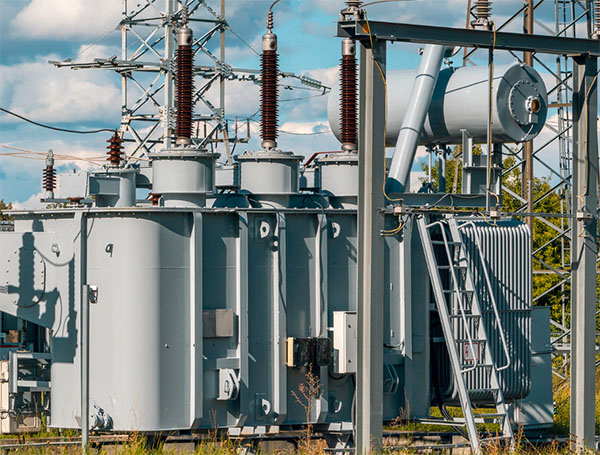
Uncover the reasons behind the 180° phase shift that can appear in transformers. Learn the fundamentals of winding connections, polarity, and how electric power industry professionals address and utilize this effect in real applications.
Table of Contents
- Introduction: Understanding Transformer Phase Shifts
- Core Principles: Why Transformers Create Phase Differences
- Scenarios Leading to a 180° Phase Shift
- Practical Impact on Electric Power Systems
- Testing Methods to Detect Phase Shift
- Personal Anecdote: Running into an Unexpected 180° Flip
- Case Study: Why Phase Rotation Matters for Industrial Loads
- Best Practices for Managing Transformer Phase Shifts
- Common Challenges and How to Overcome Them
- Future Trends in Transformer Phase-Angle Management
- Conclusion
- FAQ
1. Introduction: Understanding Transformer Phase Shifts
When stepping voltage levels up or down in electric power systems, transformers generally provide either an in-phase or out-of-phase relationship between their primary and secondary windings. In some configurations or contexts, you might notice a 180° phase shift—essentially reversing the polarity of the output compared to the input. This shift is not a glitch or a random phenomenon, but rather a direct outcome of winding arrangements, polarity choices, or specific design considerations.
But what does a 180° shift mean in practical terms? How do we detect it, and why would it appear in certain substation or industrial layouts? In this article, we’ll dig into the fundamentals of phase relationships, highlight real scenarios where a 180° shift crops up, and examine best practices for managing or leveraging this phenomenon in the field.
2. Core Principles: Why Transformers Create Phase Differences
Not every single-phase transformer automatically exhibits a 180° flip between primary and secondary waveforms. Often, they’re said to be in-phase (or “additive polarity”), or they might introduce certain shifts based on \em>polarity\em> marking conventions and how the windings are physically connected. Below are the key building blocks that lead us to phase considerations.
2.1. Basics of Transformer Windings
- Winding Turn Sequences: If you were to physically invert or flip the orientation of the secondary coil, you might effectively produce a reversed phase output—akin to turning the wave upside down, or 180° out.
- Flux Coupling: Within the iron core, primary current magnetizes the core, and the secondary coil “reads” that flux. The direction in which each coil is wound (clockwise vs. counterclockwise) establishes the sign or direction of the induced voltage.
2.2. Polarity and Dot Conventions
Manufacturers label transformer coils with dot markers or “X1/H1” markings to indicate the relative polarity. If you connect one coil in an opposing manner, you create an out-of-phase scenario—leading to a 180° shift if both ends measure from a shared reference. This labeling is integral to ensuring consistent system phase rotation or in-phase matching across multiple units, especially where parallel operations or multi-phase arrangements come into play.
3. Scenarios Leading to a 180° Phase Shift
While it’s uncommon in everyday distribution transformers, certain real-world settings or design choices can yield a phase-inverted secondary output:
- Reverse Polarity Wiring: If the secondary coil’s leads are swapped relative to the primary’s designated polarity references, the wave on the secondary side will appear flipped by 180° compared to the primary.
- Deliberate Winding Arrangements: In specialized or older substation setups, an engineer might intentionally use a reversed winding orientation to meet specific phase rotation or balancing goals in a multi-transformer environment.
- Certain Autotransformer Connections: In some autotransformer or booster-limb designs, an “inverted” limb can produce a negative or reversed output leg relative to the primary reference, effectively embedding a 180° shift for that particular coil subset.
4. Practical Impact on Electric Power Systems
Understanding how a 180° shift can disrupt or alter normal operation is crucial for safe, reliable power flows:
- Protective Relay Coordination: Relays that rely on comparing phases across different circuits or referencing phase angles for directional or differential logic can misinterpret signals if the wave is inverted. The mismatch triggers nuisance trips or fails to detect a real fault in time.
- Load Phase Requirements: Certain industrial machinery or motor drives expect a standard orientation. A reversed-phase can lead to torque in the opposite direction or zero net torque if combined with other phases incorrectly.
- Parallel Operations: If two transformers in parallel share a bus but differ by 180° in phase, they’ll experience large circulating currents, leading to overloading or damaging each other unless discovered early and corrected.
5. Testing Methods to Detect Phase Shift
Field technicians have multiple ways to confirm if a transformer’s output is in-phase or out-of-phase with the input. These checks are especially important post-maintenance, or when hooking up new units in parallel with existing systems.
5.1. Using Phase-Angle Meters
- Procedure: Apply a known signal to the primary side, measure voltage waveforms on both primary and secondary with a phase-angle meter or advanced two-channel scope. A 180° discrepancy means one wave leads or lags by exactly half a cycle.
- Outcome: Quick readouts clarify the wave offset. This method also reveals partial angles (like ±30° in certain three-phase winding combinations) that might not be a full 180° shift but still significant for parallel or directional relay logic.
5.2. Differential Relay Verification
- Relays as Phase Checkers: In bus-differential or transformer differential setups, the protective relay logs or event data often highlight a mismatch if the phase orientation is reversed. Technicians interpret these abnormal angles or unexpected negative sequence readings as hints of a 180° shift or polarity reversal.
- Example: If the differential relay sees current from the secondary 180° out of line with the primary, it might alarm or show persistent differential current with no actual load mismatch present. This triggers an investigative path leading to coil orientation checks.
6. Personal Anecdote: Running into an Unexpected 180° Flip
A few years back, I was helping to coordinate a newly rebuilt substation feeding a mix of commercial loads. We ended up with puzzling relay alarms on the brand-new transformer, even under minimal load. The protective logs spelled out a consistent “phase reversal” condition. Initially, the commissioning team suspected a software bug. After extended troubleshooting, a seasoned electrician traced the coil leads and found that the wye secondary terminals were reversed at the main bus lug, effectively flipping that winding’s output wave by 180°. Rewiring the secondary connections instantly aligned the waveforms, resolving all alarm anomalies and stabilizing the bus differential. This taught me how even an experienced crew might miss an orientation detail, prompting a system-wide chase for a “ghost problem.”
Lesson Learned: Double-verifying coil lead orientation and checking actual phase angles in real time can unearth the simplest solutions behind complicated system malfunctions.
7. Case Study: Why Phase Rotation Matters for Industrial Loads
Setting
An industrial park reliant on multiple three-phase transformers for heavy machinery faced repeated motor failures after hooking up an additional parallel transformer. Operators blamed motor design or suspected power quality issues. However, system logs implied potential conflicts in the feeders’ phase references.
Approach
- Phase Rotation Checks: Engaging portable phase rotation testers across each substation feed. The new parallel transformer indicated that one secondary set of phases was reversed, effectively creating a 180° shift compared to the original feeders.
- Motor Impact Analysis: Some motors, especially those with directional couplings, endured abnormal torque patterns or tried rotating in opposite directions, damaging mechanical couplings and leading to breakdowns.
- Corrective Reconnection: Relabeling and rewiring the reversed coil leads returned all feeders to a common orientation, leveling the phases across the bus.
Outcome
- Reduced Motor Wear: Freed from torque confusion, motor lifespans improved, halting frequent downtime that hampered production schedules.
- Stable Parallel Operations: With identical phase rotation, the two transformers now share load smoothly, eliminating large circulating or out-of-phase currents that could overheat windings.
Key Takeaway: For multi-transformer or multi-feed setups, ensuring consistent phase rotation (including whether a 180° shift is or is not desired) is paramount. Minor orientation oversights can produce major mechanical and electrical upheavals.
8. Best Practices for Managing Transformer Phase Shifts
Ensuring you don’t unexpectedly produce a 180° shift (or that you handle it responsibly if intentionally created) involves these key habits:
- Maintain Clear Polarity Markings: Always confirm nameplate data or manufacturer dot notations, particularly after coil rewinds or extended storage. Some plants adopt color-coded leads or robust labeling to avoid guesswork.
- Rigorous Commissioning Protocol: Incorporate a step specifically checking waveforms or using phase-angle meters. This preempts big surprises once the transformer is live on the bus.
- Document Tap and Connection Changes: If you adjust windings, taps, or coupling orientations, re-check for any unintended reversals that might have slipped in during the process.
- Collaborate with Relay Engineers: If a reversed wave or unusual phase orientation is discovered, promptly update relay settings or verify the protective scheme logic to maintain accurate fault detection.
9. Common Challenges and How to Overcome Them
Despite thorough planning, real-world power systems pose complexities that can mask or complicate identifying a 180° shift in a transformer’s output wave.
- 8.1. Confusing Polarity Markings
- 8.2. Mismatch in Multi-Phasing Networks
- 8.3. Load Sensitivity and Waveform Distortion
8.1. Confusing Polarity Markings
Issue:
- Manufacturer stamps might rub off or fade after years, or rewinding shops might not remark them thoroughly. Field staff lacking consistent references can inadvertently wire windings backward.
Remedy:
- Temporary Test: A small AC signal injection or using a phase indicator meter can ascertain actual polarity in minutes. Re-etch or label the results permanently once identified.
8.2. Mismatch in Multi-Phasing Networks
Complication:
- Connecting multiple single-phase transformers in a three-phase arrangement might inadvertently produce a 180° shift on one leg, leading to unsynchronized net output.
Solution:
- Detailed Vector Diagrams: Plot each phase’s polarity and winding orientation, ensuring consistent phase rotation (ABC or ACB) without inadvertent flips in the single-phase building blocks.
8.3. Load Sensitivity and Waveform Distortion
Issue:
- Heavy or nonlinear loads can muddy the wave shape, making a 180° shift less obvious on basic instruments. Distorted waveforms might mislead if the fundamental wave is masked by harmonic content.
Approach:
- High-Fidelity Meters: Tools that isolate the fundamental frequency or advanced analyzers can precisely measure phase difference, ignoring harmonic noise to highlight true wave offsets.
10. Future Trends in Transformer Phase-Angle Management
The quest for higher efficiency, microgrid integration, and dynamic load shaping spurs new design and monitoring innovations that keep an eye on phase relationships:
- Real-Time Phasor Measurement Units (PMUs): More and more substations employ PMUs for wide-area monitoring, capturing subtle angle divergences. A 180° shift stands out starkly, prompting immediate alerts if unexpected.
- Digital Twin Simulations: Virtual models replicate actual coil connections in real time. Operators can test hypothetical reconfigurations or coil rewinds without physically altering the transformer, verifying no unintended phase flips occur.
- AI-Driven Alarm Correlations: Artificial intelligence analyzing SCADA data might auto-detect a sudden wave inversion across certain feeders if a technician incorrectly rewired or replaced a small power transformer, drastically reducing diagnostic time.
11. Conclusion
A 180° phase shift in a transformer typically emerges from reversed coil polarity or deliberate winding approaches. While some single-phase contexts might never see it, certain multi-phase or specialized designs require it, or at least carefully manage it. Understanding when and why a reversed wave is produced fosters robust system reliability, ensuring motors rotate in the expected direction, relays track faults correctly, and parallel units share loads harmoniously.
Key Takeaway: Always be mindful of winding orientation, label references, and any possible wiring flips. Thorough field checks, combined with clear coil marking standards, can save you from puzzling alarms or equipment malfunctions. At the end of the day, a thorough understanding of phase shifts is a hallmark of professional, safe, and cost-efficient power system operations.
12. FAQ
- Why does a 180° phase shift occur in some transformer setups?
Typically due to reversed winding connections or purposeful design choices in certain industrial or older substation contexts, producing an inverted wave output relative to input. - Are standard distribution transformers usually phase-inverting?
No. Most single-phase distribution transformers are designed to maintain the same polarity, giving an in-phase or additive arrangement. A 180° shift is more a specialized case. - Can a 180° flip damage my relays or loads immediately?
It depends. Some devices may simply read reversed polarity, but parallel or directional protection elements might misoperate or fail to detect real faults, risking further equipment harm. - Is reversing coil leads the only source of a 180° offset?
Primarily, yes. But certain multi-phase connections (e.g., delta-wye combos) can also yield partial or entire wave inversions in specific line references if not managed carefully. - How can I confirm a 180° shift beyond manual checks?
Phase-angle meters, differential relay logs, or phasor measurement units (PMUs) clearly highlight an inverting wave if you compare input and output waveforms. - Does a reversed wave reduce transformer efficiency significantly?
Not directly. Efficiency hinges more on losses than wave orientation. However, if it leads to incorrect fault detection or load mismatch, indirect inefficiencies or damage can occur. - Are three-phase units more prone to accidental 180° shifts?
Mistakes in connecting or rewinding one phase incorrectly in multi-phase transformers can produce partial or complete wave inversions, often discovered through phase rotation checks. - What if two parallel transformers have different phase angles by 180°?
This causes large circulating currents, quickly heating both units and potentially damaging them. Operators must rectify or remove one from service to avoid hazards. - Should I re-check my ratio if I notice a 180° shift?
Yes, because a reversed coil or polarity often also changes how you interpret winding ratio or alignment. Confirm no mechanical or partial insulation issues co-occur. - How do I fix a discovered 180° shift scenario safely?
De-energize the system, verify the correct coil lead orientation per the nameplate or standardized dot convention, rewire or re-mark leads accurately, and re-test with phasor or ratio meters.
Author’s Note: Whenever dealing with potential phase inversions in transformers, consult manufacturer guidelines and relevant industry standards (IEC, IEEE) to ensure safe, consistent operations. Taking time to confirm polarity and wave orientation fosters system stability and extends the life of critical power apparatus.

 Bulgarian
  English
  German
  Spanish
  French
  Portuguese
  Vietnamese
  Afrikaans
  Amharic
  Arabic
  Aragonese
  Moroccan Arabic
  Assamese
  Azerbaijani
  South Azerbaijani
  Belarusian
  Bengali
  Tibetan
  Bosnian
  Catalan
  Czech
Czech  Danish
  Welsh
Welsh  Lower Sorbian
  Dzongkha
  Greek
Greek  Esperanto
  Estonian
  Basque
  Finnish
  Indonesian
  Italian
  Malayalam
  Latvian
  Panjabi
  Romanian
  Slovenian
  Russian