
Did I Account for the Tap Changer? The First Question in Every Ratio Mystery

You’ve run the test. The screen flashes a ratio deviation of 2.3%—far beyond the acceptable ±0.5%. Your mind races: Is this a shorted turn? A serious winding fault? Before you call for a costly internal inspection, stop. In over two decades of transformer diagnostics, I’ve learned that the first and most critical question is the […]
Why is the Excitation Current Different Across Phases? Normal Asymmetry vs. Fault Detection

For twenty-five years, I’ve reviewed thousands of transformer excitation current test sheets. Without fail, a new engineer or technician will point to the results and ask with concern: “The middle phase reading is 30% lower than the outer two. Do we have a core fault?” My answer is almost always the same: “In a standard […]
Is the deviation within the 0.5% limit? Deciphering the Critical TTR Reading

For over twenty years, I’ve stood in substations and plant floors, the hum of transformers in the background, a turns ratio tester in my hand. In that time, one question has sparked more intense discussions than any other: “The reading is off by 0.6%. Is this a real fault, or could it be the tester?” […]
How to Perform a Transformer Turns Ratio Test
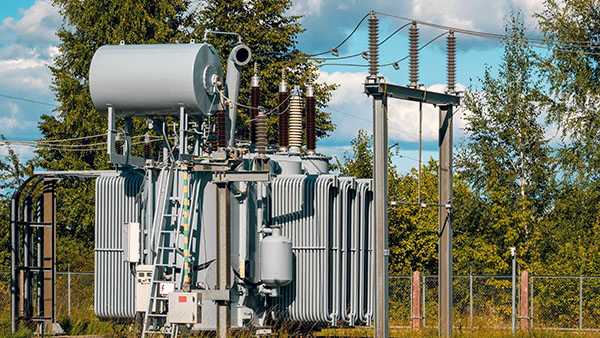
The Transformer Turn Ratio (TTR) test is a critical diagnostic procedure used to verify the voltage ratio, phase angle, and polarity of transformer windings. Using the specific “Transformer turn ratio tester” detailed in the manual, the process involves strict safety protocols, digital parameter setup, and precise wiring. 1. Safety Prerequisites Before touching the instrument or […]
How Does a Transformer Turn Ratio Tester Work?
A Transformer Turn Ratio (TTR) tester is an essential diagnostic instrument used to ensure that a transformer’s voltage windings are correct according to its design specifications. By measuring the ratio between the high-voltage (HV) and low-voltage (LV) windings, technicians can verify the transformer’s performance, polarity, and vector group. Based on the technical documentation, here is […]
From Factory to Field: The TTR Tester’s Critical Role at Every Stage of a Transformer’s Life
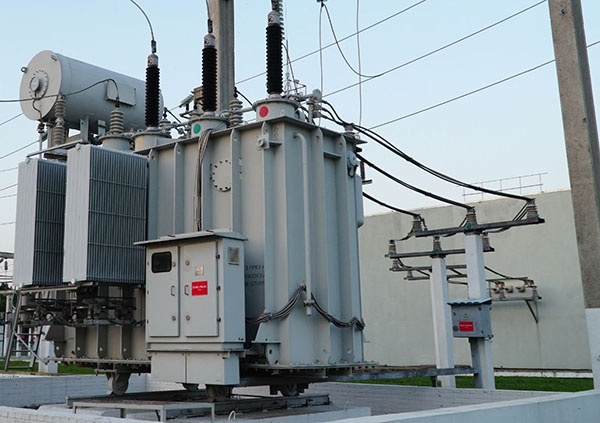
In my decades as a power systems specialist, I’ve come to view the Transformer Turns Ratio (TTR) Tester as more than just a piece of equipment. It’s a transformer’s lifelong companion, a biographer that tells its story from the moment of its creation to its final days in service. The TTR test is the single most versatile […]
My Expert Procurement Guide: The 6-Point Checklist for Your Next TTR Tester

Over my career, I’ve seen more TTR testers than I can count—from old hand-cranked units to the latest digital powerhouses. I’ve also seen companies make costly mistakes by purchasing the wrong instrument for their needs. A Transformer Turns Ratio (TTR) Tester isn’t just a tool; it’s a critical investment in the reliability and safety of your most […]
An Expert’s Field Guide: Solving the 6 Most Common TTR Testing Headaches

In my years of diagnosing high-voltage transformers, I’ve seen it all. The TTR (Transformer Turns Ratio) test is one of our most fundamental and powerful tools, but I’ve also seen it become a source of immense frustration, costly errors, and even safety risks when performed with outdated or inadequate equipment. Many of the common headaches […]
An Expert’s Guide for Vietnam: Finding a TTR Tester That Respects Your Budget and Delivers Lasting Value

Xin chào, my respected colleagues in Vietnam’s power and industrial sectors. Over my many years in this field, I’ve had the privilege of working alongside dedicated engineers and technicians across the globe. I’ve come to deeply understand that a “good tool” means different things in different markets. Here in Vietnam, I know that cost is the […]
My Expert Take: In Contact Resistance Testing, It’s All About the Micro-ohms

After decades spent on substation floors and in industrial plants, I can tell you that the most devastating electrical failures are often caused by the problems you can’t see. I’m talking about the silent killer of electrical connections: resistance. A few extra micro-ohms (µΩ) on a circuit breaker contact or a busbar joint might seem […]
 English
  German
  Spanish
  French
  Portuguese
  Vietnamese
  Afrikaans
  Amharic
  Arabic
  Aragonese
  Moroccan Arabic
  Assamese
  Azerbaijani
  South Azerbaijani
  Belarusian
  Bulgarian
  Bengali
  Tibetan
  Bosnian
  Catalan
  Czech
Czech  Danish
  Welsh
Welsh  Lower Sorbian
  Dzongkha
  Greek
Greek  Esperanto
  Estonian
  Basque
  Finnish
  Indonesian
  Italian
  Malayalam
  Latvian
  Panjabi
  Romanian
  Slovenian
  Russian