
Introduction
Winding resistance testing is a key maintenance task for power transformers, helping ensure they work efficiently and last longer by spotting issues early. This article will explain why it’s important, how it’s done, and how HVTESTTECH’s advanced testers can make the process easier and more effective.
Why It Matters
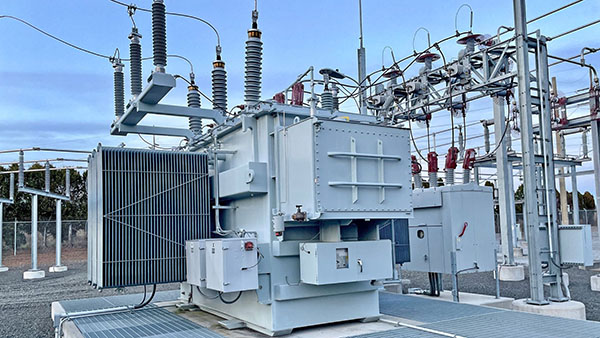
Power transformers, used in electrical grids for voltage transformation, need regular checks to prevent failures. Winding resistance testing:
- Detects faults like loose connections or broken strands, preventing costly breakdowns.
- Calculates I²R losses to assess efficiency, important for large transformers.
- Determines winding temperature to avoid overheating, ensuring safe operation.
- Ensures quality during manufacturing and maintenance, verifying design specs.
How It’s Done
The process includes:
- De-energizing and grounding the transformer for safety, then letting it cool for 3-4 hours.
- Connecting the tester using the four-wire method, adjusting for delta or wye configurations.
- Selecting a test current (up to 50A for large transformers) and waiting for stabilization.
- Measuring resistance, correcting for temperature (usually to 75°C), and comparing phase values.
HVTESTTECH’s Solution
HVTESTTECH offers Transformer Winding DC Resistance Testers with models from 10A to 50A, featuring high accuracy (±0.2% + 2 readings), rapid testing, and portability (10A model at 5.5kg). They include USB export and Bluetooth (10A model) for easy data management. Visit HVTESTTECH’s product page for details or contact Sale@hvtesttech.com or +1 323 522 4623.
The Role of Winding Resistance Testing for Power Transformers
This note provides a comprehensive analysis of winding resistance testing for power transformers, focusing on its definition, importance, testing procedures, challenges, and why HVTESTTECH’s Transformer Winding DC Resistance Testers, available at HVTESTTECH’s product page, are an excellent choice. The content is designed to inform professionals in the electrical industry, such as engineers and technicians, while encouraging visits to the specified webpage for purchasing.
Introduction
Transformers are critical components in electrical power systems, responsible for stepping up or stepping down voltage levels to facilitate efficient power transmission and distribution. Power transformers, specifically, are used in substations and power plants for voltage transformation in the power grid, typically handling capacities above 100 kVA and operating at high voltages. To ensure their reliability and longevity, regular maintenance is essential, including winding resistance testing. Winding resistance measurement involves applying a direct current (DC) to the transformer’s windings and measuring the voltage drop to calculate resistance using Ohm’s Law (R = V / I). This test is crucial for assessing the condition of the windings and connections, helping to identify issues that could lead to operational inefficiencies or failures. This article explores the importance of winding resistance testing for power transformers, the step-by-step process, challenges involved, and how HVTESTTECH’s offerings address these needs.
Understanding Winding Resistance Testing
Winding resistance testing is performed by injecting a DC current into the winding and measuring the voltage drop across it, then calculating the resistance. This is typically done using the four-wire (Kelvin) method to eliminate lead resistance errors, ensuring accurate readings, as mentioned in Winding Resistance Measurement Method | Electrom Instruments. The test is carried out as a type test, routine test, and field test, making it versatile for different stages of a transformer’s lifecycle, as noted in Winding Resistance Test of Transformer | Electrical4U. From the search results, it is evident that winding resistance testing is a fundamental diagnostic tool, helping to detect faults and ensure transformer efficiency, with sources like Transformer Winding Resistance: Test Methods and Procedures Explained – Articles – TestGuy Electrical Testing Network highlighting its importance in calculating losses and identifying issues.
For power transformers, which are typically larger and have lower winding resistances, the test is particularly important due to their critical role in the power grid. Typical winding resistance values for power transformers can range from milliohms to ohms, depending on the size and design. For example, in Power transformers winding measurements tolerances – Electrical Testing Talk – TestGuy Electrical Testing Network, for a 1600kVA transformer, HV side resistances are around 2.25 to 2.26 ohms, and LV side resistances are in the hundreds of microohms, such as 339.2μΩ, indicating very low resistances for large transformers.
Why Winding Resistance Testing is Crucial for Power Transformers
Power transformers are vital components in electrical grids, responsible for voltage transformation to enable efficient power transmission over long distances. Given their critical role, maintaining their health is paramount. Winding resistance testing plays a key role in this maintenance by offering several benefits:
- Fault Detection: By measuring the resistance, technicians can detect anomalies that indicate faults such as poor connections, broken conductor strands, or issues with tap changers. Early detection allows for timely repairs, preventing more severe problems and costly downtime. For instance, Transformer Winding Resistance: Test Methods and Procedures Explained – Articles – TestGuy Electrical Testing Network highlights that winding resistance measurements are an important diagnostic tool for assessing potential damage, and for power transformers, detecting high contact resistance in tap changers is crucial, as mentioned in WINDING RESISTANCE TEST OF TRANSFORMER – Vietnam Transformer.
- Efficiency Assessment: The test helps calculate I²R losses, which are crucial for determining the transformer’s efficiency. Accurate resistance measurements ensure precise loss calculations, aiding in performance optimization, especially for power transformers where efficiency impacts grid stability. As noted in Why Do We Measure Transformer Winding Resistance? | DV Power, measuring winding resistance assures correct connections and indicates no severe mismatches, and for power transformers, this is vital for minimizing losses in high-voltage transmission.
- Temperature Monitoring: Since resistance varies with temperature, winding resistance testing can help estimate the average temperature of the windings. This information is essential for ensuring the transformer operates within safe thermal limits, preventing overheating that could lead to insulation degradation or failure. WINDING RESISTANCE TEST OF TRANSFORMER mentions calculating winding temperature at the end of temperature rise tests, and for power transformers, accurate temperature monitoring is crucial due to their large size and heat dissipation challenges.
- Quality Control: During manufacturing, winding resistance tests verify that the transformer meets design specifications, ensuring the integrity of windings and connections. In the field, regular testing helps assess if the power transformer has been damaged or requires maintenance, aligning with standards like IEEE C57.12.90, as seen in Guide to Transformer Testing Standards – Maddox.
How Winding Resistance Testing is Performed
Conducting a winding resistance test involves several steps to ensure accuracy and safety, with specific considerations for power transformers due to their size and complexity:
- Preparation:
- De-energize the transformer and ensure it is properly grounded to prevent electrical hazards. Follow lockout/tagout procedures to prevent accidental re-energization during testing, as per Guide to Transformer Testing Standards – Maddox. Wear appropriate personal protective equipment (PPE), such as insulated gloves and safety glasses.
- Allow the transformer to cool to achieve a stable temperature, typically waiting 3 to 4 hours after de-energizing, as noted in Winding Resistance Test of Transformer | Electrical4U, to ensure the winding temperature is close to the oil temperature for accurate correction.
- Ground the transformer directly to the local station ground, then attach the test set ground to ensure a low-impedance path, as per Transformer Winding Resistance: Test Methods and Procedures Explained – TestGuy, which emphasizes grounding for safety.
- Connection:
- Use the four-wire (Kelvin) method to connect the tester to the winding terminals, minimizing lead resistance errors. Connect the current leads to the outer terminals and the voltage leads to the inner terminals of the winding, ensuring voltage leads are placed inside current leads to prevent errors, as detailed in How to Perform Resistance Test on a Transformer – Infinispark.
- For three-phase power transformers, the connection depends on the configuration. For delta-connected windings, measure between pairs of line terminals (e.g., H1-H2, H2-H3, H3-H1). For wye-connected windings, measure between each line terminal and neutral (e.g., X1-X0, X2-X0, X3-X0), as mentioned in How to Perform Resistance Test on a Transformer – Infinispark.
- Selecting Test Current:
- Choose a test current that is less than 15% of the winding’s rated current to avoid heating, which could alter the resistance value. For large power transformers, higher currents (up to 50A) may be necessary for accurate measurements of low resistances, as noted in Winding Resistance Test of Transformer | Electrical4U, which mentions not exceeding 15%. For example, for a power transformer with a nominal current of 100A, a test current up to 15A is appropriate, suggesting a 20A tester would be suitable, aligning with How to choose a DC winding resistance tester – Knowledge – Huazheng Electric Manufacturing (Baoding) Co., Ltd, which recommends 10A for ≤10MVA and up to 50A for 120-240MVA.
- Measurement:
- Apply the DC current and wait for it to stabilize, which may take from seconds to minutes depending on the transformer’s size, as mentioned in How to Perform Resistance Test on a Transformer – Infinispark. For power transformers, stabilization can take longer due to their inductance, potentially several minutes.
- Record the resistance value once stable. For transformers with tap changers, test at each tap position or at least at the designated tap for routine maintenance, as per Transformer Winding Resistance: Test Methods and Procedures Explained – TestGuy, which mentions testing each tap.
- Temperature Correction:
- Measure the oil temperature to approximate the winding temperature, ensuring the difference between top and bottom oil temperatures is less than 5°C, as noted in WINDING RESISTANCE TEST OF TRANSFORMER – Vietnam Transformer. For power transformers, accurate temperature measurement is crucial due to their large size.
- Correct the measured resistance to a standard temperature (e.g., 75°C) using the formula:
RC=RM×(TS+TK)/(TM+TK)
where:
- RC is the corrected resistance at standard temperature TS (e.g., 75°C),
- RM is the measured resistance at temperature TM,
- TK is 234.5 for copper or 225 for aluminum.
This correction ensures comparability with factory data, and for power transformers, this step is vital due to significant temperature variations during operation.
- Interpretation:
- Compare the corrected resistance values between phases; they should be within 1-2% of each other for new transformers, and up to 5% for in-service units, as per Obstacles to Measuring Power Transformer Winding Resistance – NETAWORLD JOURNAL. For power transformers, this comparison is critical due to their multiple windings.
- Check against historical data or manufacturer’s specifications to identify any significant deviations, which might indicate developing issues, such as increasing resistance over time, as inferred from Why Do We Measure Transformer Winding Resistance? | DV Power.
Challenges in Testing Power Transformers
Testing power transformers presents unique challenges due to their size and design, which can impact the accuracy and efficiency of winding resistance testing:
- Low Resistance Values: Power transformers have very low winding resistances, often in the milliohm range, requiring high test currents and precise measurement techniques to obtain accurate readings. For example, LV side resistances can be around 339.2μΩ, as seen in Power transformers winding measurements tolerances – Electrical Testing Talk – TestGuy Electrical Testing Network, necessitating testers with high current outputs, like HVTESTTECH’s 50A model.
- Stabilization Time: The inductive nature of large power transformers means that it can take a significant amount of time for the test current to stabilize, delaying the testing process. This can range from minutes for large transformers, as noted in How to Perform Resistance Test on a Transformer – Infinispark, impacting field testing efficiency.
- Temperature Measurement: Accurately determining the winding temperature is crucial for correction but can be challenging, especially in field conditions where temperature gradients may exist. For power transformers, measuring oil temperature accurately is essential, and ensuring the difference between top and bottom oil temperatures is less than 5°C, as per WINDING RESISTANCE TEST OF TRANSFORMER – Vietnam Transformer, adds complexity.
HVTESTTECH’s Solution: Advanced Winding Resistance Testers
HVTESTTECH offers a range of Transformer Winding DC Resistance Testers designed to meet the demands of testing power transformers. Their testers are engineered to provide high accuracy, rapid testing, and ease of use, making them ideal for both field and laboratory applications.
Key Features:
- High Accuracy: With an accuracy of ±(0.2% + 2 readings), HVTESTTECH’s testers ensure precise measurements, critical for detecting small changes in resistance, especially for power transformers with low resistance values. This aligns with industry standards, as seen in Winding Resistance Meters & Tap Changer Analyzers | DV Power, which mentions accuracy up to 0.1%.
- Multiple Test Currents: Models are available with output currents from 10A to 50A, catering to transformers of various sizes, from small distribution units to extra-large power transformers. For example, their 10A model is ideal for small transformers, while the 50A model is suited for extra-large power transformers requiring high precision, as per the recommended uses on their webpage.
- Rapid Testing: Advanced technology allows for quick stabilization of test currents, reducing the time required for each measurement and increasing testing efficiency, particularly beneficial for large power transformers where stabilization can take longer, enhancing productivity, as per the product summary.
- Portability: The 10A model is lightweight at 5.5kg, making it highly portable for field use, while higher current models like the 50A, at 15.5kg, are designed for robustness in laboratory settings, facilitating on-site testing for power transformers, as seen in the specifications table.
- Data Management: All models feature USB data export, and the 10A model includes Bluetooth connectivity for wireless data transfer, facilitating easy record-keeping and analysis, which is essential for trend monitoring in power transformer maintenance, as mentioned in Winding Resistance Measurement Summary | Electrom Instruments.
To provide context, here is a table summarizing the technical specifications of HVTESTTECH’s winding resistance testers, which informed the feature analysis:
| Model | Output Current | Range | Dimension (mm) | Weight (kg) | USB Data Export | Mobile Phone Bluetooth |
|---|---|---|---|---|---|---|
| 10A | <5mA, 40mA, 200mA, 1A, 5A, 10A | 0.5mΩ | 365×285×175 | 5.5 | Yes | Yes |
| 20A | <5mA, 1A, 2.5A, 5A, 10A, 20A | 100μΩ | 410×250×380 | 14.6 | Yes | No |
| 40A | <5mA, 2.5A, 5A, 10A, 20A, 40A | 50μΩ | 410×250×380 | 15.5 | Yes | No |
| 50A | <5mA, 2.5A, 5A, 10A, 20A, 50A | 50μΩ | 410×250×380 | 15.5 | Yes | No |
This table highlights features like portability (lightweight models) and high accuracy, which were incorporated into the article to emphasize the benefits of HVTESTTECH’s products.
Case Study: Preventing Failure in a 100MVA Transformer
In a recent maintenance check, a utility company used HVTESTTECH’s 40A winding resistance tester to assess a 100MVA power transformer. The test revealed a slight increase in resistance in one phase. Upon further inspection, technicians discovered a loose connection that was promptly repaired. This early detection prevented a potential failure that could have led to significant downtime and repair costs, showcasing the value of accurate winding resistance testing with HVTESTTECH’s equipment.
Conclusion
In conclusion, winding resistance testing is an indispensable part of power transformer maintenance, providing critical insights into the condition of the windings and helping to prevent failures. By understanding the testing process, addressing challenges like low resistance values and long stabilization times, and utilizing advanced equipment like HVTESTTECH’s Transformer Winding DC Resistance Testers, maintenance teams can ensure the reliability and efficiency of their transformers. Their range of models ensures there’s a perfect fit for every need, from small distribution transformers to extra-large power transformers.
For more information on HVTESTTECH’s range of power testing equipment, visit HVTESTTECH’s product page or contact their sales team at Sale@hvtesttech.com or +1 323 522 4623.
Key Citations
- Winding Resistance Measurement Method | Electrom Instruments
- Winding Resistance Test of Transformer | Electrical4U
- Transformer Winding Resistance: Test Methods and Procedures Explained – Articles – TestGuy Electrical Testing Network
- Power transformers winding measurements tolerances – Electrical Testing Talk – TestGuy Electrical Testing Network
- WINDING RESISTANCE TEST OF TRANSFORMER – Vietnam Transformer
- Why Do We Measure Transformer Winding Resistance? | DV Power
- Guide to Transformer Testing Standards – Maddox
- How to Perform Resistance Test on a Transformer – Infinispark
- How to choose a DC winding resistance tester – Knowledge – Huazheng Electric Manufacturing (Baoding) Co., Ltd
- Obstacles to Measuring Power Transformer Winding Resistance – NETAWORLD JOURNAL
- Winding Resistance Meters & Tap Changer Analyzers | DV Power
- Winding Resistance Measurement Summary | Electrom Instruments

 French
  English
  German
  Spanish
  Portuguese
  Vietnamese
  Afrikaans
  Amharic
  Arabic
  Aragonese
  Moroccan Arabic
  Assamese
  Azerbaijani
  South Azerbaijani
  Belarusian
  Bulgarian
  Bengali
  Tibetan
  Bosnian
  Catalan
  Czech
Czech  Danish
  Welsh
Welsh  Lower Sorbian
  Dzongkha
  Greek
Greek  Esperanto
  Estonian
  Basque
  Finnish
  Indonesian
  Italian
  Malayalam
  Latvian
  Panjabi
  Romanian
  Slovenian
  Russian