
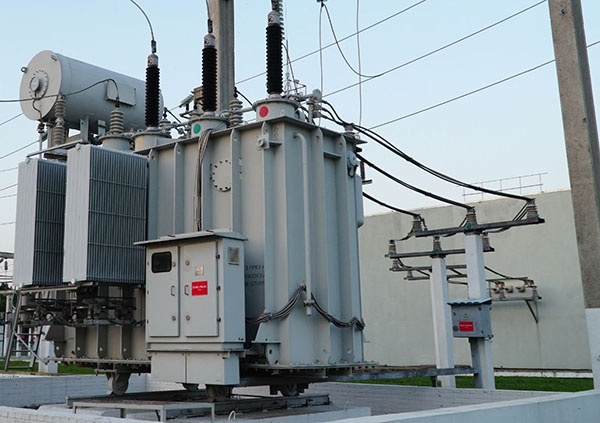
In my decades as a power systems specialist, I’ve come to view the Transformer Turns Ratio (TTR) Tester as more than just a piece of equipment. It’s a transformer’s lifelong companion, a biographer that tells its story from the moment of its creation to its final days in service. The TTR test is the single most versatile and fundamental check we can perform, providing critical insights at every stage.
A reliable, accurate, and versatile TTR tester is perhaps the most indispensable tool in my arsenal. It’s why I’m so particular about the equipment I use, and why the robust and precise TTR test equipment from HVTestTech.com/transformer-turns-ratio-ttr-testers/ is a constant in my toolkit. Let me walk you through a transformer’s life and show you exactly where and why the TTR test is non-negotiable.
Stage 1: Manufacturing – The “Birth Certificate” of Quality
The Scenario: A new 100 MVA power transformer is on the factory floor, moments away from being sealed and shipped. This is our first and best chance to create its “birth certificate”—a perfect baseline of its designed electrical characteristics.
My Expert Insight: The final Quality Assurance (QA) TTR test is paramount. Here, we’re not looking for faults; we’re confirming perfection. We meticulously verify that every winding is wound to the exact specification, every tap on the OLTC (On-Load Tap Changer) is correct, and the vector group configuration matches the design prints.
A Real-World Example: I was overseeing a factory acceptance test where our HVTestTech TTR Tester detected a tiny 0.2% ratio deviation on a single tap of a regulating winding. The manufacturer was skeptical. But the precision of the instrument was undeniable. An internal check revealed a minor, but critical, mis-brazing of a connection. Finding this on the factory floor saved the manufacturer a catastrophic in-service failure, a multi-million dollar warranty claim, and immense reputational damage.
Stage 2: Commissioning – The Final Guardian Before Energization
The Scenario: That same transformer has now been transported hundreds of miles and installed in a new substation. Is it still in perfect condition?
My Expert Insight: A TTR test is a mandatory pre-energization check. The stresses of transport and lifting can cause subtle shifts in the windings or core, and installation errors can lead to incorrect connections. Energizing a transformer with internal damage or an incorrect vector group connection can lead to an immediate, explosive failure.
Why it’s Critical: I was on a commissioning site where the crew was behind schedule. They wanted to skip the final checks. I insisted on a quick TTR test. Our portable unit immediately flagged an incorrect vector group. The installation crew had swapped two phase leads on the low-voltage side. That 15-minute test prevented a phase-to-phase fault that would have destroyed the new asset and caused a major grid incident.
Stage 3: Routine Maintenance – The Early Warning System
The Scenario: The transformer has been in service for 10 years. It seems to be operating normally, but is it?
My Expert Insight: This is where the TTR tester becomes our early warning system. During scheduled routine transformer maintenance, we compare the current TTR readings against the original commissioning data. Any deviation, however small, is a red flag. We can detect:
- Insulation deterioration or moisture ingress causing shorted turns.
- Mechanical wear and contact issues in the OLTC.
- Loose connections that could lead to overheating.
By tracking TTR data over time, we move from reactive repairs to truly predictive maintenance, addressing issues before they lead to an unplanned outage.
Stage 4: Troubleshooting – The Detective’s First Clue
The Scenario: A transformer’s protection relay has tripped, or monitoring systems show abnormal currents. The fault isn’t obvious. Where do we start?
My Expert Insight: After a visual inspection, the TTR test is my first diagnostic step. It’s a fast, non-invasive way to get a clear picture of the transformer’s internal state. A failed TTR test immediately tells us the problem is inside the main tank—likely a winding or tap changer fault—and a passed test allows us to confidently rule that out and focus our transformer troubleshooting efforts on external factors like cabling, bushings, or control circuits.
Stage 5: Special Transformers – The Test of Versatility
The Scenario: Your fleet isn’t just standard transformers. You have autotransformers, Z-type grounding transformers, or complex phase-shifting units.
My Expert Insight: Not all TTR testers can handle this complexity. This is where a high-quality, versatile instrument proves its worth. A modern tester from HVTestTech, for example, has pre-programmed test modes and advanced algorithms specifically designed for these special applications. It can accurately measure the unique ratios and phase angle relationships inherent in these complex designs, ensuring no part of your fleet goes untested.
My Final Recommendation
From the factory floor to the troubleshooting call, the Transformer Turns Ratio Tester is your most faithful diagnostic partner. Investing in a single, high-quality unit that is accurate, rugged, and versatile enough for all five stages of a transformer’s life is one of the smartest decisions you can make.
I encourage you to explore the professional-grade TTR test equipment at HVTestTech.com/transformer-turns-ratio-ttr-testers/. They are engineered to provide the reliability and precision you need to protect your assets, at every stage of their long and vital service life.

 Russian
  English
  German
  Spanish
  French
  Portuguese
  Vietnamese
  Afrikaans
  Amharic
  Arabic
  Aragonese
  Moroccan Arabic
  Assamese
  Azerbaijani
  South Azerbaijani
  Belarusian
  Bulgarian
  Bengali
  Tibetan
  Bosnian
  Catalan
  Czech
Czech  Danish
  Welsh
Welsh  Lower Sorbian
  Dzongkha
  Greek
Greek  Esperanto
  Estonian
  Basque
  Finnish
  Indonesian
  Italian
  Malayalam
  Latvian
  Panjabi
  Romanian
  Slovenian