
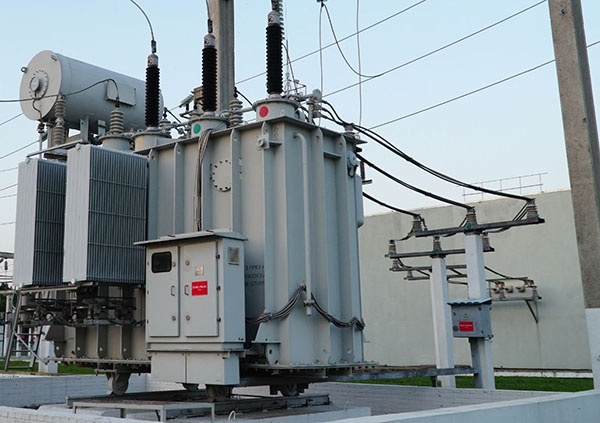
Transformers are the backbone of electrical systems, converting voltage levels to ensure efficient power distribution. To maintain their performance and longevity, regular testing is essential—and one of the most critical tests is the turns ratio test. A transformer turns ratio tester measures the ratio of the number of turns in the primary winding to the number of turns in the secondary winding. This test verifies that the transformer is operating correctly and helps identify potential issues like shorted turns or winding damage.
However, not all turns ratio testers are created equal. Understanding their specifications is key to selecting the right tool for your application, whether you’re working in a manufacturing facility, a power utility, or a maintenance workshop. This article breaks down the essential specifications of transformer turns ratio testers, explaining what they mean and why they matter—all in a way that’s perfect for a WordPress blog audience.
Why Specifications Matter
Choosing the right tester isn’t just about picking the most advanced or expensive model. It’s about finding the one that suits your specific needs. The right tester will:
- Provide accurate and reliable measurements.
- Fit your testing environment (e.g., fieldwork vs. lab).
- Offer features that enhance efficiency and safety.
- Align with your budget without compromising quality.
Understanding the specifications ensures you make an informed decision, maximizing both performance and value.
Key Specifications Explained
Here are the most important specifications to consider when evaluating transformer turns ratio testers:
1. Accuracy
- What It Is: Accuracy indicates how close the tester’s measurement is to the true turns ratio. It’s typically expressed as a percentage (e.g., ±0.1%).
- Why It Matters: High accuracy is crucial for detecting small deviations that could signal transformer issues. For critical applications, such as in power grids, even minor errors can lead to significant problems.
- Consider This: Look for testers with accuracy better than ±0.1% for precision work. For less critical tasks, ±0.5% may suffice.
2. Measurement Range
- What It Is: The measurement range defines the minimum and maximum turns ratios the tester can measure (e.g., 0.8 to 20,000).
- Why It Matters: Different transformers have varying turns ratios. A wide range ensures the tester can handle diverse transformer types, from small instrument transformers to large power transformers.
- Consider This: Choose a tester with a range that covers all the transformers you work with. For specialized applications, a narrower range might be acceptable.
3. Resolution
- What It Is: Resolution is the smallest change in the turns ratio that the tester can detect (e.g., 0.001).
- Why It Matters: High resolution allows for more precise measurements, which is essential when testing transformers with very close turns ratios or when detecting subtle faults.
- Consider This: For most applications, a resolution of 0.001 is adequate. However, for high-precision needs, look for testers with finer resolution.
4. Test Voltage
- What It Is: Test voltage is the voltage applied to the transformer during testing (e.g., 10V, 100V).
- Why It Matters: The test voltage must be appropriate for the transformer’s size and design. Too high a voltage can damage small transformers, while too low a voltage may not provide accurate results for large ones.
- Consider This: Select a tester with adjustable test voltages or one that matches the specifications of your transformers.
5. Automation
- What It Is: Automation refers to the tester’s ability to perform tests with minimal manual intervention, often through pre-set programs or digital controls.
- Why It Matters: Automated testers reduce human error, speed up testing, and are ideal for high-volume environments.
- Consider This: If you perform frequent tests, invest in an automatic tester. For occasional use, a manual tester may be more cost-effective.
6. Portability
- What It Is: Portability indicates whether the tester is designed for easy transport (e.g., handheld, lightweight).
- Why It Matters: Field technicians need portable testers for on-site testing, while lab or manufacturing settings can accommodate larger, benchtop models.
- Consider This: Choose based on your work environment. A portable tester is a must for fieldwork, but a benchtop model might offer more features for stationary use.
7. Additional Features
- Data Logging: Stores test results for documentation and analysis.
- Fault Detection: Identifies issues like shorted turns or incorrect ratios.
- Connectivity: Options like USB or Bluetooth for data transfer.
- Why They Matter: These features enhance usability, support compliance with standards, and streamline reporting.
- Consider This: Prioritize features that align with your operational needs, such as data logging for regulatory audits.
How to Interpret Specifications for Your Application
Different applications demand different tester capabilities. Here’s how to tailor your choice:
- Power Utilities:
- Key Specs: High accuracy (±0.1%), wide measurement range, automation.
- Why: Ensures precise testing across large transformers with varying ratios.
- Manufacturing Facilities:
- Key Specs: Automation, data logging, high resolution.
- Why: Supports quality control and efficient testing in production lines.
- Maintenance Workshops:
- Key Specs: Portability, adjustable test voltage, fault detection.
- Why: Facilitates on-site diagnostics and troubleshooting.
- Research and Development:
- Key Specs: High accuracy, fine resolution, adjustable test voltage.
- Why: Allows for detailed analysis and experimentation.
By aligning the tester’s specifications with your specific use case, you ensure optimal performance and avoid overspending on unnecessary features.
Common Pitfalls to Avoid
When selecting a tester, watch out for these mistakes:
- Ignoring the Measurement Range: A tester that can’t handle your transformers’ ratios is useless.
- Overlooking Portability Needs: A benchtop model won’t help in the field.
- Focusing Solely on Price: Low-cost testers may lack accuracy or durability.
- Neglecting User Training: Advanced features are only valuable if your team knows how to use them.
Conclusion
Understanding the specifications of transformer turns ratio testers is essential for making an informed purchase. By focusing on accuracy, measurement range, resolution, test voltage, automation, and portability, you can select a tester that meets your needs and ensures the reliability of your transformers. Whether you’re maintaining a power grid or testing in a lab, the right tester is a valuable investment in performance, safety, and efficiency.
Take the time to evaluate your requirements, compare models, and choose wisely. Your transformers—and your bottom line—will thank you.

 Slovenian
  English
  German
  Spanish
  French
  Portuguese
  Vietnamese
  Afrikaans
  Amharic
  Arabic
  Aragonese
  Moroccan Arabic
  Assamese
  Azerbaijani
  South Azerbaijani
  Belarusian
  Bulgarian
  Bengali
  Tibetan
  Bosnian
  Catalan
  Czech
Czech  Danish
  Welsh
Welsh  Lower Sorbian
  Dzongkha
  Greek
Greek  Esperanto
  Estonian
  Basque
  Finnish
  Indonesian
  Italian
  Malayalam
  Latvian
  Panjabi
  Romanian
  Russian